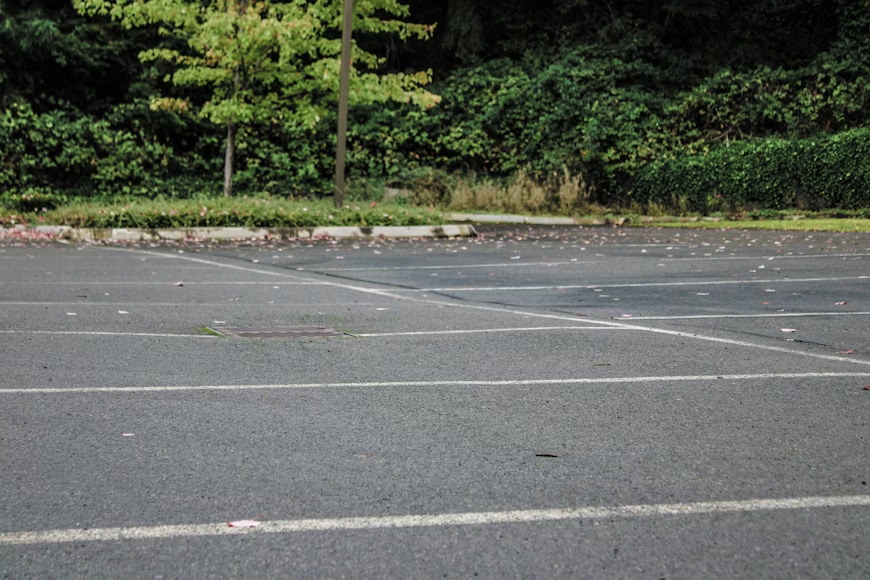
As simple as it looks, a commercial parking lot is one of the faces of your property. It endures more daily use than any other part of your property. Yet, its impact goes beyond supporting daily operations. Your commercial parking lot plays a major role in safety and impacts the long-term maintenance costs and financial performance of your property.
Over time, even the most durable concrete parking lots begin to show signs of wear. Heavy vehicle loads, freeze-thaw shifts, drainage problems, and even chemical exposure slowly compromise concrete’s structural integrity. It then becomes important to recognize the early warning signs of failing pavement.
If deterioration is left unattended, it can lead to costly repairs or disruption of operations. In this article, you’ll learn six standout signs that it is time to consider replacing your commercial parking lot:
Table of Contents
Widespread Cracking Across the Surface
With years of use, it is common to see small cracks on concrete surfaces. However, it is a sign of deeper structural issues to see these cracks across larger sections of the parking lot. While minor cracks can be repaired, widespread cracking indicates the slab is losing its structural strength. This could be due to the weakening of the concrete base caused by expansion and contraction cycles. You should look out for patterns such as:
- Long linear cracks stretching across multiple slabs
- Spiderweb or alligator cracking that is interconnected
- Cracks that widen over time
Faded Striping and Layout Inefficiencies
Parking lots need to change as the business needs evolve. This means that as properties expand or regulations change, the original layout of the lot may not support current needs and inflow. Either the parking spaces are too narrow or the loading zones may be poorly positioned. There is also the need to comply with updates to ADA accessibility requirements.
When any of these are the case, it presents a good opportunity to replace the pavement for better functionality. At this stage, many managers consult a qualified concrete contractor to evaluate the structural conditions and layout improvements. The result of this assessment will be used to plan a new installation.
Frequent Patching and Recurring Repairs
When repairs become routine, it may be time for a replacement. If you are constantly patching cracks that reopen within months, areas that break down after resurfacing, or sections that constantly require sealing, it’s more economical to replace the damaged pavement. Constant patching is a hidden cost drain for commercial properties.
Uneven Surfaces and Slab Settlement
Concrete slabs should remain level decades after installation. However, the reality is that soil movement, poor drainage, or heavy vehicle traffic can cause sections to sink, rise or shift. Besides the operational inconvenience, uneven surfaces are a liability risk for businesses. They can cause trip hazards or damage to vehicles. Some of the signs of slab settlement include:
- Slabs that tilt or rock under weight
- Sudden height differences between panels
- Vehicles scraping the pavement when entering or exiting
Drainage Problems and Standing Water
Concrete is designed to work with gravity rather than against it. Whenever you notice large pools of water, often called birdbaths, lingering long after a rainstorm, your lot has lost its grade. Over time, the trapped water weakens the concrete base as water seeps into the joints. This causes the slabs to shift and even accelerates cracking.
Addressing these issues and achieving a perfect 2% slope for drainage requires precision engineering. It takes more than patchwork and may involve redesigning the pavement slope through full replacement.
Spalling and Surface Flaking
Spalling occurs when the top layer of the concrete begins to flake or peel away. This exposes coarse aggregate underneath. Common culprits for this include:
- De-icing chemicals or salts
- Poor initial mixing
- Freeze-thaw cycles
- Heavy traffic loads
A scaling surface looks less professional and can be a tripping hazard for pedestrians. It also increases the rolling resistance of vehicles. This leads to more debris and dust settling on your property.
Endnote
A well-maintained commercial parking lot protects both property value and operational safety. When you take note of these signs, you can take proactive actions before the minor issues become major expenses on infrastructure. Concrete replacement may seem like a large project. However, when timed correctly, it can significantly reduce future repair costs.