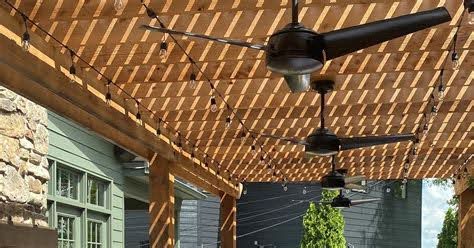
You buy an outdoor ceiling fan because you want that porch, patio, pergola, or covered deck to feel easy and comfortable. Then a very normal question hits you: how long is this thing actually going to last? Not just in theory, but in real life, with humidity, dust, summer heat, surprise rain, and maybe even salty coastal air.
The practical answer is this: a good outdoor ceiling fan often lasts around 10 to 15 years in normal residential use, but rough outdoor conditions can drag that down closer to 7 to 10 years. In a protected, covered area with regular cleaning and the correct rating, it can last longer. In a wet, windy, sun-beaten, or coastal spot, it can wear out sooner. That range is a practical market estimate drawn from recent consumer-facing service guidance checked in March 2026, not a single government “official lifespan” rule.
That difference matters. A fan installed under a dry covered porch lives a much easier life than one hanging near a pool or beach. The motor, finish, hardware, blades, and electronics all age faster when they keep fighting moisture and corrosion. Think of it like leaving two bicycles outside: one under a garage roof, one in the open. Both still work at first, but one clearly has a tougher life.
Key takeaway: if you match the fan to the environment, install it on a fan-rated box, clean it a few times a year, and react early to wobble or noise, you can stretch useful life by years instead of months.
As of March 30, 2026, here are two current, easy-to-use facts that help frame the decision. First, the U.S. Department of Energy says using a ceiling fan can let you raise the thermostat by about 4°F without reducing comfort in cooling season. Second, ENERGY STAR says certified ceiling fans are up to 44% more efficient than conventional models. So lifespan is not just about avoiding replacement; it is also about keeping a comfort tool that still pays you back on energy and comfort every season. Source notes: U.S. Department of Energy, updated March 2026; ENERGY STAR product guidance, checked March 2026.
Table of Contents
What “lasting” really means for an outdoor ceiling fan
When you ask how long an outdoor ceiling fan lasts, you are really asking three smaller questions at once.
First: how long will the motor and bearings keep spinning smoothly? Second: how long will the blades, finish, and hardware resist warping, rust, fading, and cracking? Third: how long will the controls, light kit, receiver, and electronics keep behaving?
Many people focus only on the motor. That is understandable, but incomplete. Some brands offer a limited lifetime motor warranty, including current Hunter support guidance and Minka-Aire warranty language, yet that does not mean every other part will look or work perfectly for life. A fan can still become noisy, unbalanced, rusty, or cosmetically tired long before the motor fully dies.
That is why the best lifespan question is not “Will it still spin?” but “Will it still spin quietly, safely, and efficiently in the place where I need it?” That is the real everyday standard.
The 7 biggest factors that decide how long your outdoor fan lasts
1. Whether you chose the correct rating: damp-rated or wet-rated
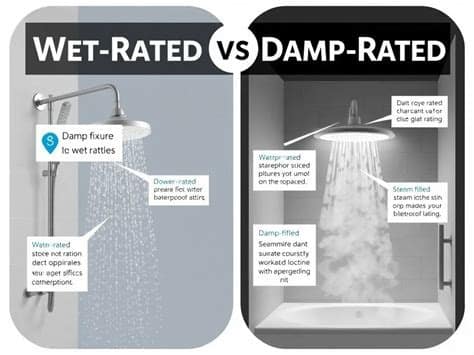
This is the biggest mistake people make, and it shortens fan life fast. A damp-rated fan is meant for covered outdoor areas where moisture is present but direct rain is not. A wet-rated fan is built for direct exposure to rain, water spray, and harsher moisture. Hunter’s current outdoor guidance and multiple current retail product listings checked in March 2026 make this distinction very clear.
If you put a damp-rated fan where wind-blown rain can hit it, you are asking it to do a job it was not built for. That usually means quicker corrosion, electronic trouble, and a shorter useful life.
2. Your climate
Heat, humidity, and salt air are relentless. Coastal environments are especially rough because salt speeds corrosion. Even a strong fan ages faster near the ocean than it does in a dry inland backyard. Some outdoor lines specifically advertise corrosion or salt-air resistance for that reason.
3. The quality of the fan’s materials
Outdoor fans that use sealed housings, better coatings, all-weather blades, and corrosion-resistant hardware usually last longer. Cheap painted metal and lower-grade fasteners can start looking rough surprisingly quickly. This is one reason bargain fans can feel expensive later.
4. Installation quality
A fan that is slightly loose, mounted on the wrong box, or poorly balanced may still run, but it often develops wobble, noise, and wear earlier. The National Electrical Code guidance summarized by Leviton’s Captain Code and similar electrical references stresses using an outlet box listed for ceiling fan support. ABB also notes the latest industry requirements for fan-rated ceiling boxes. That is a safety issue first, but it also affects lifespan because vibration is hard on everything.
5. How many hours you run it
A fan that runs eight to ten hours a day through long hot seasons is aging faster than one used only on weekends. That does not mean you should avoid using it. It just means your maintenance habits matter more when your fan is doing real work.
6. How often you clean it
Dust and grime do more than look bad. They can throw blade balance slightly off, trap moisture, and make the motor work harder. In outdoor spaces, pollen, insects, and greasy residue can build up faster than people expect.
7. How quickly you react to small warning signs
A soft clicking sound, a tiny wobble, or a rusty screw seems minor. But those little signs often become bigger failures if you ignore them. Catching them early is one of the easiest ways to stretch lifespan.
A simple lifespan table you can actually use
| Location type | Typical exposure | Practical lifespan range | What usually decides the outcome |
| Covered porch | Humidity, dust, indirect moisture | 10 to 15 years | Correct damp rating, cleaning, stable installation |
| Open patio | Rain, spray, wind, sun | 7 to 12 years | Wet rating, sealed components, finish quality |
| Coastal area | Salt air, humidity, corrosion | 5 to 10 years | Coastal-resistant construction and inspection frequency |
| Poolside or very humid zone | Constant moisture, chemical exposure | 6 to 10 years | Wet rating, corrosion resistance, frequent cleaning |
These ranges are practical household estimates, not universal guarantees. They combine current buyer guidance, recent service guidance, and what current manufacturer outdoor categories and warranties suggest about expected durability.
Damp-rated, wet-rated, and coastal-resistant are not the same thing
This part confuses a lot of people, so let’s make it simple.
| Type | Best for | Can rain hit it? | Main benefit |
| Damp-rated | Covered porches, screened patios, sunrooms | No, not direct rain | Handles humidity and occasional moisture |
| Wet-rated | Open patios, gazebos, pergolas, pool areas | Yes | Built for direct water exposure |
| Coastal-resistant | Beach and salt-air environments | Usually yes if also wet-rated | Extra protection against corrosion |
Why does this matter so much? Because every time you under-rate the environment, you shorten life. A damp-rated fan in a wet location is like wearing sneakers in a storm. You might get away with it briefly, but the damage adds up.
Everyday scenario 1: You have a covered back porch with a roof and deep overhang, and rain never reaches the fan. A damp-rated model can be enough.
Everyday scenario 2: Your pergola looks covered, but sideways rain regularly blows through. You need wet-rated, even if the space feels “mostly protected.”
Everyday scenario 3: You live near the coast. Even without direct rain, salty air can attack finishes and hardware. A fan advertised as corrosion- or salt-air-resistant is worth the extra money.
How to estimate whether your fan is aging normally or too fast
You do not need complicated engineering for this. Two simple formulas are enough.
Formula 1: Estimated yearly running hours
Yearly fan hours = average hours per day × days used per year
Example: if you run your patio fan 6 hours a day for about 240 days a year, that is 1,440 hours per year.
Why this helps: if two fans are the same age but one has run twice as many hours, the harder-working fan has aged more in a practical sense. This is useful when comparing a lightly used vacation-home fan with one on your main patio.
Formula 2: True yearly ownership cost
Yearly ownership cost = (purchase price + installation cost + total repair cost) ÷ years of service
Example: if your fan cost $280, installation cost $180, and you spent $90 on repairs over 8 years, your yearly ownership cost is ($280 + $180 + $90) ÷ 8 = $68.75 per year.
This is very practical. A cheap fan that dies early can cost more per year than a better fan that runs quietly for much longer.
What warning signs mean your fan may not last much longer?
Here are the signs that matter most.
- Wobbling: often caused by loose hardware, warped blades, or bad balancing.
- Grinding or buzzing: can point to bearings, motor wear, or electrical issues.
- Rust spots or flaking finish: a big clue that moisture is winning.
- Slow starting or random stopping: may mean failing capacitor, control, or motor trouble.
- Light flicker or remote issues: often electronics rather than the motor, but still important.
- Blade cracking, sagging, or swelling: especially serious outdoors.
Key takeaway: one symptom does not always mean immediate replacement, but two or three symptoms together usually mean you should inspect it now, not later.
3 easy ways to make your outdoor ceiling fan last longer
Method 1: Match the fan to the exact exposure level
This is the best “maintenance” step because you do it before damage starts. Read the product rating carefully and be honest about your weather. If wind-blown rain can reach the fan, go wet-rated. If you are near salt water, look for corrosion-resistant or coastal-focused construction too.
Success sign: after the first heavy season, the fan still looks clean, the finish is intact, and there is no early rust at screws or blade arms.
Method 2: Clean and inspect it on a simple schedule
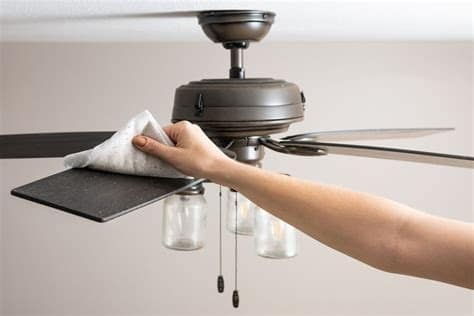
Wipe blades, check screws, and look for rust or wobble every few months. In humid or coastal areas, monthly visual checks during peak season are even better. Hunter’s current wet-rated guidance specifically recommends periodic inspection, especially in harsh environments.
Success sign: no new wobble, no sticky buildup, no spreading rust, and steady airflow.
Method 3: Fix small issues before they become expensive ones
Tighten hardware, rebalance the blades, replace a failing remote receiver, or call an electrician if startup behavior changes. Small repairs are usually much cheaper than waiting for vibration or moisture to damage more parts.
Success sign: the fan sounds normal again and runs smoothly across all speeds.
Which maintenance step is easiest and fastest?
| Task | Typical time | Difficulty | Why it matters |
| Wipe blades and housing | 10 to 15 min | Easy | Reduces grime, moisture hold, and imbalance |
| Tighten visible screws | 5 to 10 min | Easy | Helps stop wobble before wear spreads |
| Check for rust and finish damage | 5 min | Easy | Catches corrosion early |
| Rebalance blades | 15 to 30 min | Moderate | Reduces strain on motor and mount |
If you do only one thing, do the quick wipe-and-check routine. It is easy, useful, and it often reveals trouble early enough to save you money.
3 relatable mistake stories that shorten fan life
Mistake story 1: “It’s under a roof, so a damp-rated fan is fine.”
A homeowner installs a damp-rated fan under a patio cover. It looks protected. But when storms roll in, sideways rain reaches the motor housing. By the second humid season, there is rust and remote trouble. The lesson: “covered” is not the same as “dry.”
Mistake story 2: “It only wobbles a little.”
The fan keeps running all summer with a slight wobble. Over time, vibration loosens hardware and stresses the mount. The noise gets worse, and now the repair is bigger. The lesson: small vibration is not harmless background behavior.
Mistake story 3: “I’ll clean it later.”
Pollen, dust, and sticky grime sit on the blades for months. Moisture clings to that layer, and balance slowly shifts. Airflow drops, the fan looks tired, and one blade starts to discolor. The lesson: neglect ages a fan faster than most people realize.
When should you repair, and when should you replace?
Repair usually makes sense when the fan is structurally sound, correctly rated for the location, and the problem is limited to a balancing issue, capacitor, receiver, or minor hardware replacement.
Replacement makes more sense when the fan is obviously under-rated for the environment, the motor is failing, corrosion is widespread, the blades are damaged, or the fan is old enough that repeated repairs are becoming annoying. This is where Formula 2 helps.
A practical rule many homeowners like is this: if the next repair is a large share of the cost of a better, properly rated new fan, replacement starts to look smarter. Not because the old one cannot be revived, but because you are buying back peace, safety, and likely a longer life.
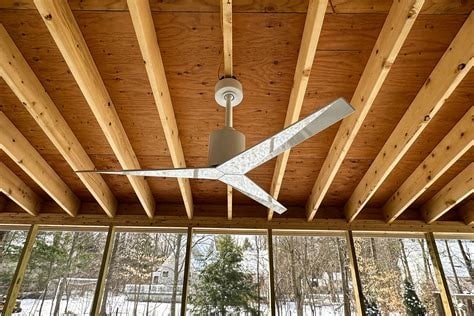
How outdoor fan life connects to comfort and energy savings
A long-lasting fan is not just a durability win. It is also a comfort system that keeps doing useful work. The U.S. Department of Energy says ceiling fans can help you raise your thermostat by about 4°F during cooling season without reducing comfort. That means a healthy outdoor fan can make the patio feel better and also support smarter whole-home cooling habits when doors are opening and closing during warmer months.
ENERGY STAR’s current guidance says certified ceiling fans are up to 44% more efficient than conventional models. So if you are replacing an aging fan anyway, choosing a more efficient one can improve both lifespan odds and operating efficiency.
This is one of those unnoticed points people miss: durability and efficiency often go together. Better outdoor fans are usually not just tougher. They also tend to have better motors, better controls, and better long-term performance.
6 genuinely useful links for checking ratings, safety, and buying details
U.S. Department of Energy’s fan cooling guide gives you a free, official explanation of how fans improve comfort and why raising the thermostat by about 4°F can still feel comfortable.
ENERGY STAR’s ceiling fan page helps you check what certified efficiency means and why some fans are up to 44% more efficient than standard models.
Hunter’s outdoor ceiling fan category is useful for seeing how a major manufacturer separates outdoor fans by damp and wet use.
Hunter’s damp-rated versus wet-rated guide gives a simple practical explanation of when each outdoor rating fits your space.
Hunter’s current warranty page lets you see what “limited lifetime” means in real warranty language, especially for the motor versus other parts.
Wikipedia’s ceiling fan overview is a quick beginner-friendly refresher on how ceiling fans work, their main parts, and why they cool you by moving air rather than lowering room temperature.
Common questions you may still have
Can an indoor fan survive outside for a while?
Sometimes, briefly. But it is a bad gamble. Outdoor moisture and corrosion can damage the finish, blades, motor housing, and electronics. The wrong fan can fail sooner and may create safety issues.
Do more expensive outdoor fans always last longer?
Not always, but higher price often buys better coatings, hardware, blade materials, and motor quality. The real test is not price alone. It is whether the fan is correctly rated and well built for your exact location.
Is a limited lifetime motor warranty proof that the whole fan will last for life?
No. It mainly tells you the manufacturer is offering strong support on the motor under specific conditions. Controls, finish, lights, and installation problems are different matters.
Should you worry about the mounting box?
Yes. A ceiling fan should be mounted to a fan-rated box or equivalent approved support. That is basic safety, and it also helps reduce vibration-related wear.
The bottom line: so, how long do outdoor ceiling fans last?
Most well-chosen outdoor ceiling fans last about 10 to 15 years, while harsher exposure can shorten life to roughly 7 to 10 years. In coastal, poolside, or rain-exposed conditions, life can be shorter unless the fan is truly wet-rated and corrosion-resistant. That is the most honest consumer answer.
If you want the longest useful life, focus on four things: pick the right rating, buy better materials, install it correctly, and inspect it regularly. Those steps are easy to understand and genuinely useful. They also solve the most common confusion people have: the fan that “should have lasted longer” often did not fail because fans are bad. It failed because the environment, rating, or maintenance plan was wrong.
So if you are standing on your patio wondering whether to keep your current fan, repair it, or replace it, use this simple checklist:
- Is it the correct damp or wet rating for the exact spot?
- Is it still smooth, quiet, and stable at all speeds?
- Are rust, wobble, or electronic glitches starting to stack up?
- Does the yearly ownership cost still make sense?
If you answer yes to the first two and no to the last two, your fan may still have good years left. If not, replacing it with a properly rated model may save you hassle, noise, and repeat repair costs.
Final takeaway: the lifespan of an outdoor ceiling fan is less about luck and more about fit. Put the right fan in the right place, treat it well, and it can keep you comfortable for a long time. Once your fan starts showing repeated rust, wobble, or electrical problems, do not wait for a dramatic failure. That is your signal to act while the fix is still easy.
Source notes used in this article, checked March 2026: U.S. Department of Energy fan guidance; ENERGY STAR ceiling fan guidance; current Hunter outdoor category and warranty pages; current consumer-facing electrical code summaries from Leviton and ABB; recent 2026 market guidance on practical ceiling-fan lifespan ranges. Where no single government lifespan standard exists, ranges in this article are presented as practical homeowner estimates rather than hard official guarantees.