Supply chains are increasingly expected to operate with the precision of real-time systems. Volatility in demand, transportation disruptions, and supplier uncertainty have pushed organizations to adopt more advanced planning tools capable of simulating outcomes before decisions are executed. Among these tools, digital twins have emerged as a powerful method for modeling supply chain behavior under dynamic conditions.
A digital twin relies on the assumption that physical systems behave predictably when represented in a virtual environment. However, this assumption holds only when the physical infrastructure itself maintains stability over time.
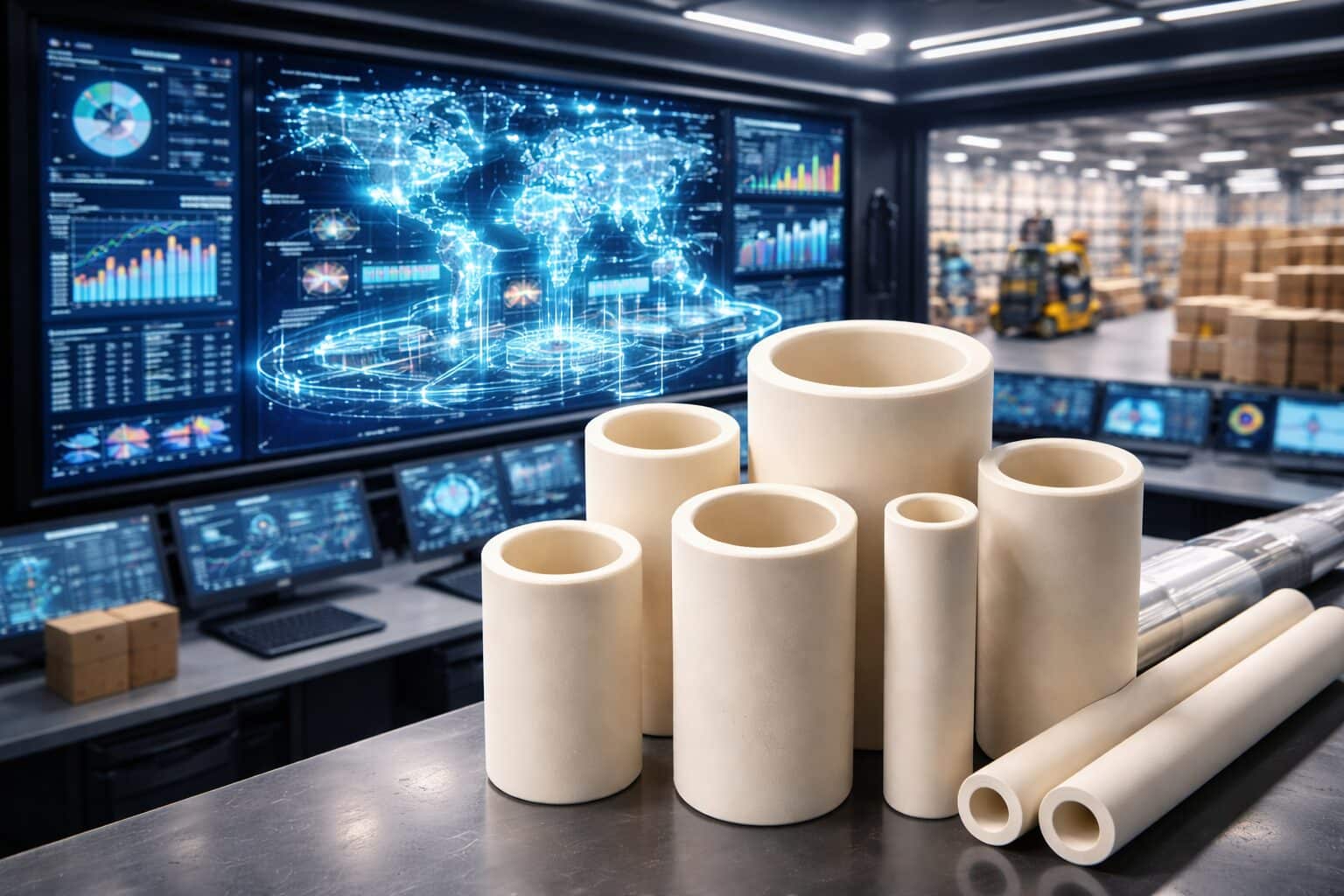
In temperature-sensitive or mechanically stressed environments, material degradation can distort real-world performance, weakening the accuracy of digital models. This has led some organizations to pay closer attention to foundational components such as alumina ceramic tubes enabling stable thermal interfaces in digital twin supply chain models, which help preserve consistent operating conditions that digital twins depend on.
As digital twins evolve from planning tools into operational control systems, the alignment between physical reliability and virtual accuracy becomes a strategic concern rather than a purely technical one.
Table of Contents
Why Physical Variability Undermines Digital Twin Accuracy
Digital twins integrate data from sensors, control systems, and historical records to simulate inventory flows, production rates, and logistics constraints. These simulations assume that equipment behavior remains within defined tolerances. When physical components drift due to heat exposure, wear, or chemical interaction, the resulting discrepancies introduce noise into the model.
In warehouses, production-adjacent facilities, and logistics hubs, even minor deviations can propagate across the network. A misaligned component or unstable thermal interface may lead to inconsistent throughput, inaccurate sensor readings, or unexpected downtime. Over time, these deviations reduce confidence in predictive outputs, forcing planners to add buffers or override digital recommendations.
Addressing material-driven variability at the physical layer is therefore essential to maintaining the integrity of digital twin simulations.
Materials as Enablers of Reliable Simulation Environments
The effectiveness of a digital twin is tied to how faithfully it mirrors reality. Durable materials that maintain geometry, insulation properties, and mechanical strength under stress help ensure that the physical system behaves as modeled.
Advanced ceramics, particularly alumina-based materials, are increasingly specified in environments where thermal stability and chemical resistance are required. In automated supply chain infrastructure, alumina ceramic industrial components supporting long-term reliability in automated supply chain infrastructure are used in roles that demand consistent performance over extended service cycles, such as structural supports, insulation interfaces, and protective housings.
By reducing the rate of material-induced change, these components help narrow the gap between simulated and actual system behavior.
Integrating Digital Twins with Risk Management Strategies
Forward-looking supply chain organizations are integrating digital twins into broader risk management frameworks. Rather than treating disruptions as isolated events, they model how physical degradation, maintenance schedules, and material lifecycles influence network performance.
This integration allows decision-makers to test scenarios such as extended equipment operation, deferred maintenance, or increased throughput under constrained conditions. When physical systems are built on stable material foundations, these simulations produce insights that can be acted upon with greater confidence.
In this context, material selection becomes part of strategic planning rather than an afterthought delegated solely to engineering teams.
The Future of Digital Twin–Driven Supply Chains
As digital twins become more autonomous and predictive, their dependence on physical consistency will only increase. The next generation of supply chain models will not simply reflect what might happen, but actively guide operational decisions in real time.
Organizations that recognize the interdependence between digital intelligence and material reliability will be better positioned to extract value from these technologies. By aligning physical infrastructure with modeling assumptions, supply chain leaders can move from reactive adjustments to proactive optimization.
Ultimately, digital twins deliver their greatest impact when the physical systems they represent are designed for stability, durability, and long-term predictability.