
Table of Contents
Key Takeaways
- Proactive facility maintenance prevents unexpected disruptions and extends the lifespan of critical infrastructure.
- Effective restoration strategies are essential for rapid recovery after unforeseen events, ensuring minimal operational impact.
- Integrating advanced technologies enhances predictive maintenance and disaster preparedness.
Business continuity represents the utmost necessity among businesses both big and small, and is far more than mere strong plans on paper. A practical and proactive response to probable breakdowns by restoration and maintenance of the facility is necessary to ensure smooth functioning of the facility. These attempts are what can frequently ensure that there is a prolonged downtime and a quick restoration to sanity. Whether it comes to a security of major assets or mitigation of the operational risks, any business of any type can enjoy the long-term benefits of focusing on professional commercial restoration services as one of the components of the strategy.
Facility restoration and maintenance is not just a solution to finding a quick fix. They assist in developing sustainable environments which are resistant to accidents and disasters. Either to reduce the impact of a storm, to react to equipment outages or to do repairs on the long-term damage, having established working procedures already entails trust among the stakeholders, enhances the reputation and makes productivity sustainable in the long-term.
Companies that spend on continuous maintenance of their facilities usually be ahead of other companies, which spend a lot of time and money attending to unexpected failures. The existence of preventative measures supported with the willingness to restore is essential to lessen the number of disruptions, prolong the life of the infrastructure, and address the safety and regulatory norms.
With the emphasis on maintenance completion and preparedness the businesses can save money and simultaneously underpin the safety and dependability culture. The presence of a properly maintained facility will be less susceptible to emergencies, which can prove to be significant both in the ordinary operation of the facility and any unexpected crisis.
The Importance of Proactive Maintenance
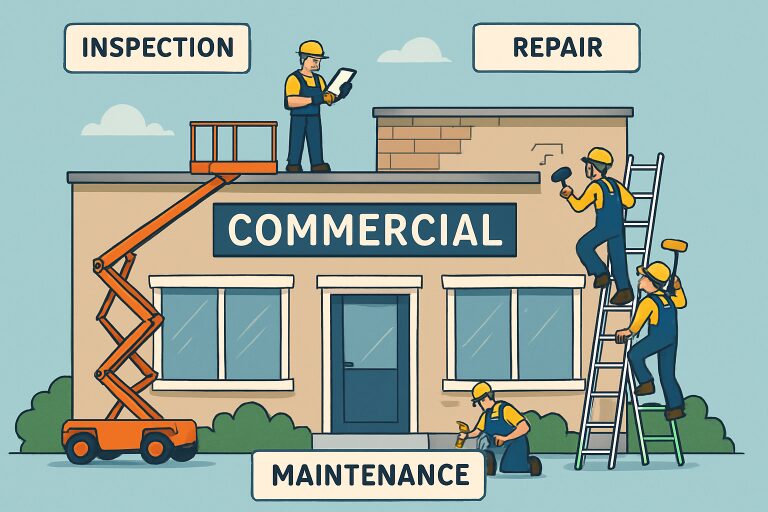
Consistent maintenance is the heart of dependable operations of the facility. One cannot merely react to issues whenever they occur. The addition of commercial restoration services to your maintenance plan is a sure way to get any damage or deterioration of your equipment fixed in a timely and professional manner. Rather, regular check-ups and preventive maintenance enable companies to detect wear, corrosion, and failure indications early enough before they deteriorate. Early identification and correction of small problems keeps the costs at an affordable level, building is safe and the mechanical systems run efficiently.
Well maintained facilities do not only get less breakdowns but also enable safer environment among the staff and clients. They are also in adherence to checks and on-job safety. Makula has indicated that repair costs and downtimes on operations are very low in companies that maintain proactive maintenance programs thus improving profitability in the long run.
Effective Restoration Strategies
Despite the most appropriate maintenance plans, there are emergencies and unforeseen events. Facility restoration refers to the procedure of coming back to normal operations in an efficient and speedy way. A detailed plan which includes assessment, mobilizing resources and communication is the basis of successful restoration. All the components are vital in mitigating the adverse effects of an incident.
Damage Assessment
In the case of such an incident like a severe weather damage, a fire or a water leak, one needs to carry out an immediate assessment. Quick assessment implies that the major risks are quickly determined and the restoration activities can be sorted by the urgency and potential impact.
Resource Allocation
The most important thing is to get the right people and materials within the shortest time possible. The allocation of resources can be made decisive to eliminate bottlenecks and make the restoration work proceed without undue delays. It can be made much easier through having agreements and relationships with reputable commercial restoration partners.
Clear Communication Plans
Open communication channels help in keeping the staff, stakeholders and customers updated. Such transparency, besides making the affected people comfortable, aids in organizing the recovery efforts effectively, which minimizes the chances of reputational losses.
Integrating Technology for Enhanced Resilience
Due to the fast changing technology, the way facilities are being managed and maintained has changed. The use of modern tools, including IoT-enabled sensors, predictive analytics, and cloud-based platforms, are now used by the modern organizations to address the needs of maintenance proactively. These technologies allow the HVAC, plumbing, electrical, and structural systems to be monitored in real-time so that deviations are detected early before they develop into emergencies.
Intelligent facility management systems assist in automating the scheduling process, ensuring maximum life of equipment and also facilitate informed decision-making. Cloud solution usage will make availability of maintenance schedules, schematics and restoration protocols during crisis to enhance business continuity even when on-site problems are present.
Final Thoughts
Business continuity is based on much more than troubleshooting as problems emerge. By combining intensive investment in the restoration and maintaining of facilities, as well as the incorporation of new technology, the organizations develop powerful infrastructures that can resist the disruptions. Proactive administration does not only save physical assets, it also saves the trust and security of both the employees and clients. Facility care is an essential business operation rather than a cost center and such a viewpoint is the key to success in the current competitive world. Properly managed properties place companies in a position where they can stay relevant, be able to react swiftly to losses and provide sustainable value to all parties involved.