Table of Contents
Key Takeaways
- Data centers are essential to infrastructure resilience, ensuring system continuity and recovery during disruptions.
- Modern data centers use redundancy, cybersecurity, and disaster recovery strategies to strengthen global digital infrastructure.
- Efforts to address rising energy demands and climate risks are shaping the evolution of data center designs and operations.
Table of Contents
- Understanding Infrastructure Resilience
- The Integral Role of Data Centers
- Enhancing Grid Stability
- Adapting to Climate Change
- Challenges and Considerations
- Final Thoughts
Understanding Infrastructure Resilience
In the digital age, nearly every aspect of life depends on networks and systems that must withstand both predictable and unexpected disruptions. Infrastructure resilience refers to how well critical systems ranging from energy and healthcare to telecommunications can anticipate, withstand, and recover from adversities such as cyberattacks, power outages, or severe weather. This capacity is fundamental to ensuring the stability of economies, the safety of populations, and the continuity of vital services.
A driving force behind this resilience is the integration of advanced digital infrastructure. At the heart of this transformation are data centers. These facilities store, process, and manage vast volumes of information, quietly powering our access to online banking, video streaming, real-time communications, and enterprise operations. Modern resilience strategies increasingly rely on the expertise of specialized data center contractors who design, build, and maintain structures purpose-built to withstand disruptions and evolving threats.
In practice, resilient infrastructure means that when various sectors face threats, data flows remain uninterrupted, services are quickly restored, and societal impact is minimized. The ongoing convergence of computing technologies and robust physical structures is critical in meeting global expectations for reliability.
Governments, businesses, and individuals now expect seamless digital experiences at all times. As a result, infrastructure that is both agile and resilient is necessary not only for economic survival but also for sustaining public trust.
The Integral Role of Data Centers
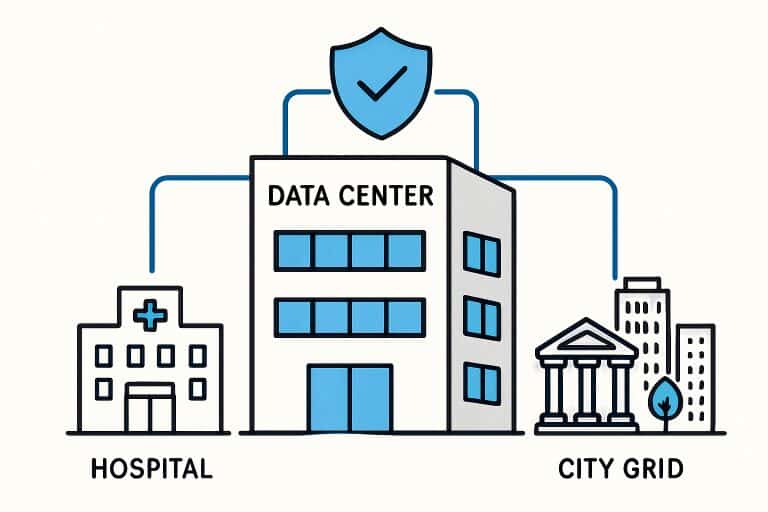
Data centers are pivotal in building layers of protection and backup that underpin infrastructure resilience. Their importance can be understood through core operational strategies:
- Data Redundancy: By replicating information across geographically distributed sites, data centers ensure that critical data remains accessible, even if one location is impacted by a hardware failure or a local disaster.
- Disaster Recovery: Leading data centers have comprehensive recovery plans and redundant systems that enable rapid service restoration after natural disasters or technical failures.
- Cybersecurity Measures: Given the evolving threat landscape, data centers employ next-generation security protocols, continuous monitoring, and advanced threat detection to protect sensitive information from cybercriminals.
The combination of physical security, redundant power supplies, and cutting-edge technology reduces risk. As organizations expand into new markets or digitize their operations, the need for reliable data infrastructure grows, making professionally managed data centers more valuable than ever.
Enhancing Grid Stability
The global proliferation of data centers requires a careful balancing act with existing power grids. Data centers are among the most energy-intensive facilities. Their presence introduces large, voltage-sensitive IT loads to the electrical network. If a data center suddenly loses power or shuts down, it can cause rapid fluctuations in grid frequency and voltage. Solutions such as integrating high-voltage circuit breaker-operated braking resistors at transmission substations have been introduced to enhance the resilience of power grids under such stress scenarios. These approaches help stabilize the grid, securing reliable electricity for regional communities and businesses alike.
Data center operators are increasingly working with utilities to optimize power usage, participate in demand response programs, and invest in on-site renewable energy generation. These innovations not only heighten grid resilience but also contribute to environmental sustainability, a growing priority across global technology sectors.
Adapting to Climate Change
Climate change is rapidly redefining the challenges to digital and physical infrastructure. The world’s largest data centers are responding with adaptive design philosophies and operational innovations:
- Climate-Resilient Design: New facilities often feature elevated construction, advanced flood defenses, and passive cooling systems, enabling them to withstand more intense storms and temperature extremes.
- Renewable Energy Integration: To minimize environmental impact, many data centers are maximizing their use of wind, solar, and hydroelectric energy sources, moving toward low-carbon operations.
- Intelligent Efficiency: Data centers are leveraging artificial intelligence and machine learning for real-time monitoring, energy optimization, and predictive maintenance. These smart systems help operators continually adapt to evolving climate risks.
The shift toward sustainable, climate-resilient infrastructure has gained momentum as both regulators and consumers demand lower emissions and stronger disaster-prepared infrastructure from technology providers.
Challenges and Considerations
While data centers strengthen infrastructure resilience, their rapid growth brings new challenges that must be addressed to ensure long-term sustainability.
- Energy Consumption: Data centers are among the world’s largest electricity consumers. Without careful energy management strategies—such as free cooling, server virtualization, and more efficient hardware—their massive consumption could overwhelm local grids. Regulatory agencies, like the U.S. Department of Energy, are working with industry to promote research into energy-efficient computing solutions.
- Geopolitical Risks: Highly centralized data centers can be vulnerable to regional instability, regulatory restrictions, or targeted attacks, underscoring the value of distributed, modular facility designs for true global resilience.
Leaders in digital infrastructure need to proactively consider physical location, energy sourcing, emergency planning, and regulatory compliance as they design future-ready, resilient data environments.
Final Thoughts
Resilient infrastructure is the foundation for the uninterrupted flow of modern life. Data centers are not merely warehouses for digital data; they are strategic assets that enable societies to function during both everyday operations and periods of disruption. By embracing advanced technology, sustainable design, and forward-looking operational practices, data centers are shaping a future where essential services remain reliable, secure, and resilient in a constantly evolving world.