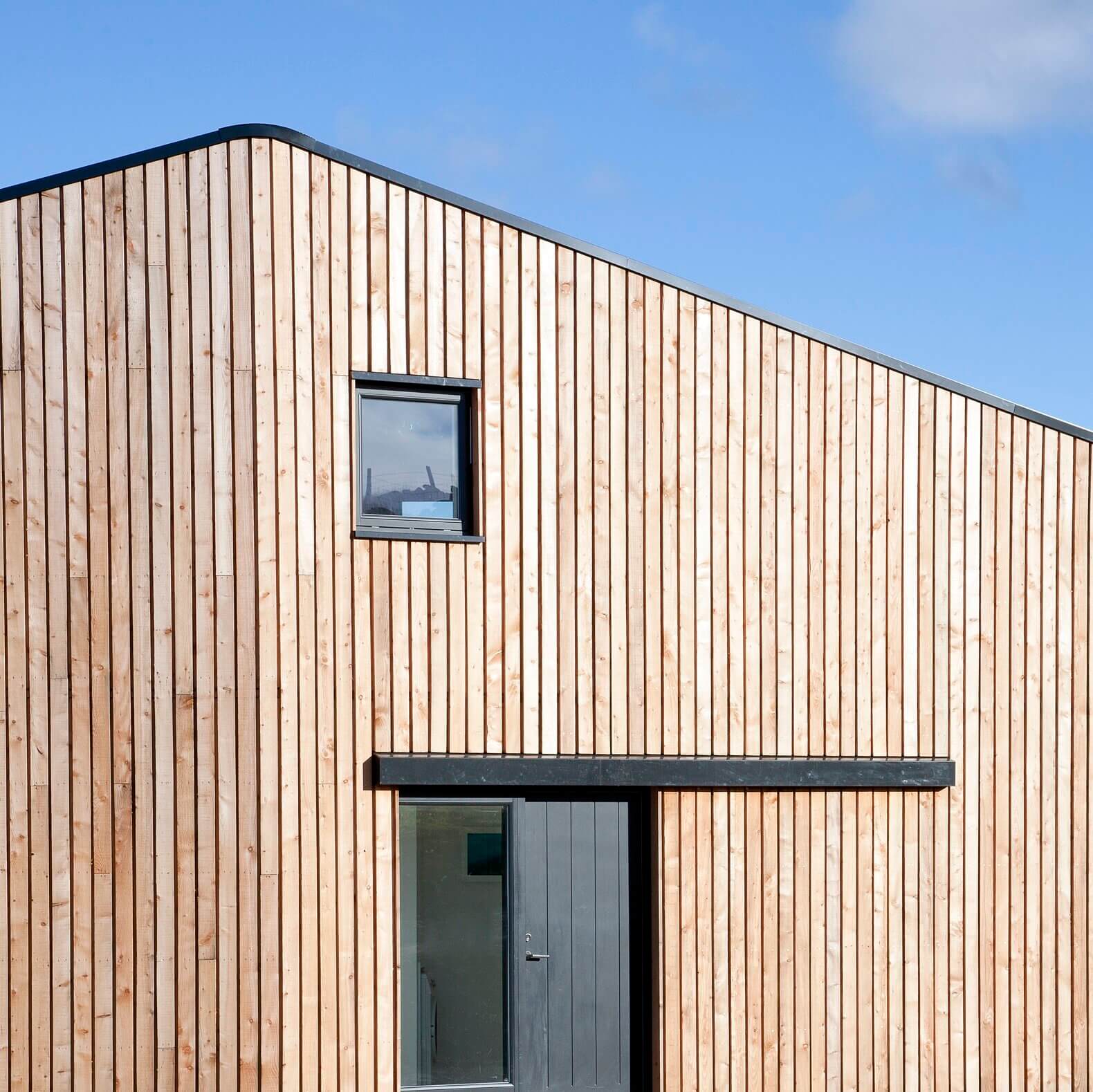
Timber cladding is widely used across UK construction, from residential extensions to large-
scale developments. However, its long-term performance is determined far more by
installation quality than by material choice alone.
Incorrect detailing—particularly around ventilation, fixings, and junctions—remains one of
the most common causes of failure. For contractors and project teams, understanding how to
install timber cladding correctly is essential to achieving durability, compliance, and
consistent visual results.
Table of Contents
What Defines a Correct Timber Cladding System?
A properly installed timber façade operates as a ventilated rainscreen system. This means
the outer cladding layer is not intended to be fully waterproof. Instead, water is managed
through drainage and airflow behind the boards.
A standard system build-up includes:
- External timber cladding boards
- Fixings (face-fixed or secret fix)
- Battens and counter-battens
- Breather membrane
- Structural wall substrate
For a full step-by-step breakdown of installation sequencing and correct system design, see
how to install timber cladding UK.
Ventilation: The Most Critical Requirement
Ventilation is essential for preventing moisture build-up and ensuring timber stability.
Typical UK Best Practice:
- Continuous cavity behind cladding (minimum 25mm typical)
- Openings at both base and head of façade
- Insect mesh to maintain airflow while preventing blockage
Without proper ventilation: - Moisture becomes trapped
- Timber may swell or distort
- Risk of decay increases significantly
Even high-performance materials will underperform without correct airflow.
Batten Configuration and Substructure
The batten system supports the cladding and creates the ventilation cavity.
Standard Configurations:
Cladding Orientation Batten Setup
Horizontal boards Vertical battens
Vertical boards Horizontal battens + counter-battens
Complex façades Engineered subframe systems
Key requirements:
- Use treated timber battens suitable for external conditions
- Maintain consistent centres (typically 400–600mm)
- Ensure precise alignment to avoid visual defects
Poor batten setup leads directly to uneven boards, fixing issues, and long-term movement
problems.
Fixing Methods: Accuracy and Material Choice
Correct fixing is critical for both performance and appearance.
Face Fixing
- Visible fixings
- Faster installation
- Suitable for most applications
Secret Fix Systems - Hidden fixings within board joints
- Cleaner finish
- Requires higher precision
In all cases: - Stainless steel fixings should be used
- Over-tightening must be avoided to allow for movement
Timber Movement and Expansion
Timber expands and contracts depending on moisture levels. This movement must be
accommodated during installation.
Key considerations:
- Leave appropriate expansion gaps
- Avoid rigid fixing that restricts movement
- Follow manufacturer spacing recommendations
Thermally modified timber is often specified where reduced movement is required,
improving installation consistency.
Fire Compliance in UK Timber Cladding Systems
Fire performance is a critical aspect of timber cladding design, particularly in multi-storey or
regulated buildings.
Key Considerations:
- Fire classification requirements based on building height and use
- Use of fire-retardant treatments where necessary
- System design aligned with UK Building Regulations
For projects requiring compliant façade systems, solutions such as fire rated timber
cladding systems UK are used to achieve required performance standards.
Early coordination between design and construction teams is essential to ensure compliance
without delays or redesign.
Junction Detailing: Where Most Failures Occur
The most vulnerable points in timber cladding systems are not flat surfaces but junctions.
Critical Areas:
- Window and door reveals
- External and internal corners
- Base of façade
- Roofline and parapet details
Best practice includes: - Flashings to direct water away
- Drip edges to prevent water ingress
- Continuous ventilation paths
Poor detailing in these areas often leads to staining, moisture ingress, and premature failure.
Common Installation Mistakes
Recurring issues seen across UK projects include:
- Inadequate ventilation gaps
- Incorrect batten orientation for vertical cladding
- Use of non-stainless fixings
- Lack of expansion allowance
- Poor alignment and inconsistent spacing
Avoiding these mistakes significantly improves both durability and appearance.
Installation Efficiency and Material Selection
Material choice affects not only performance but also installation efficiency.
Timber with higher stability:
- Reduces on-site adjustments
- Maintains consistent board alignment
- Minimises installation errors
This is particularly important on larger façades where small inconsistencies become highly
visible.
Why Installation Defines Lifespan
Even the highest-quality timber will fail if installed incorrectly. Conversely, a well-installed
system using appropriate materials can perform reliably for decades.
For contractors, this means:
- Following correct system build-ups
- Maintaining precision during installation
- Coordinating detailing across all façade elements
Installation is not simply a construction step—it is the defining factor in how timber cladding
performs over time.
Conclusion
Timber cladding remains one of the most effective façade systems in UK construction, but
only when installed correctly. Ventilation, fixing accuracy, and compliance with fire
regulations are essential components of a successful system.
By prioritising installation quality from the outset, project teams can ensure that timber
façades deliver both durability and long-term performance.