You asked for the fastest route to a premium walnut vanity, so we sifted through spec sheets, trade surveys, and hundreds of owner reviews to spot the 48-inch cabinets that truly deliver.
Design pros report that bathrooms are pivoting toward warm woods, with rich walnut replacing cool greys in 2024 remodels (homesandgardens.com). At the same time, vanity sales slipped 3.4 percent last year, creating timely discounts as manufacturers chase volume, according to Kitchen & Bath Design News.
Next up: a quick comparison grid, deep-dive reviews, and a no-fluff buying guide so you can choose with confidence. Let’s dive in.
Table of Contents
Quick comparison at a glance
Before we cover each 48-inch vanity in detail, see the six contenders side by side. Keep the grid handy while you compare features during your remodel planning.
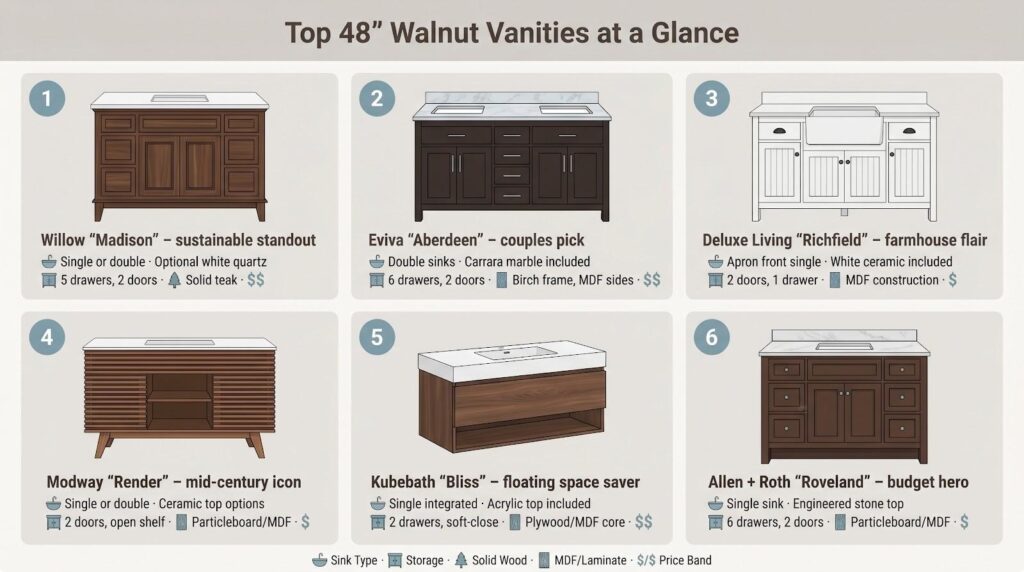
| Rank | Model & nickname | Sink setup | Countertop | Storage profile | Core construction | Street price* |
| 1 | Willow Bath & Vanity Madison – sustainable standout | Single or double | Optional white quartz | 5 drawers, 2 doors | Solid teak, Dark Walnut Finish Teak | $$ |
| 2 | Eviva Aberdeen – couples pick | Double | Carrara marble (included) | 3 center drawers, 2 doors | Solid wood frame, MDF panels | $ |
| 3 | Deluxe Living Richfield – farmhouse flair | Single apron-front | Integrated fireclay | 2 side drawers, base cabinet | Solid wood frame, painted finish | $ |
| 4 | Modway Render – mid-century icon | Single | Cabinet only | 2 slatted doors, open shelf | MDF core, walnut laminate | $ |
| 5 | Kubebath Bliss – floating space saver | Single | Glossy acrylic (integrated) | 2 wide drawers | Water-resistant MDF, walnut laminate | $ |
| 6 | Allen + Roth Roveland – budget hero | Single | Carrara marble (included) | 6 drawers, 2 doors | Birch frame, MDF sides | $ |
*Price legend: $ ≈ under $1,200 | $ ≈ $1,200–$1,900 | $$ ≈ $2,000 +
Construction quality generally rises with price: solid teak sits at the top tier, while engineered cores keep models like Kubebath and Modway affordable. Sink layout is another fast tiebreaker—Eviva and Madison fit two bowls in this width, and Richfield’s apron basin commands most of its counter. Keep these trade-offs in mind as we explore each vanity.
Willow “Madison” 48-inch vanity: overview and first impressions
Stand in front of Madison and it feels like real furniture, not a flat-pack box that wandered into the bath by mistake. It’s also one of eight 48-inch models grouped by Willow Bath and Vanity, letting you scan finishes, leg styles, and single- versus double-sink layouts side by side before you hit “add to cart.” The cabinet is solid teak finished in dark walnut that shows crisp grain instead of a printed pattern. At about 190 pounds, two people need a dolly to move the crate, and that heft signals durability better than any brochure.
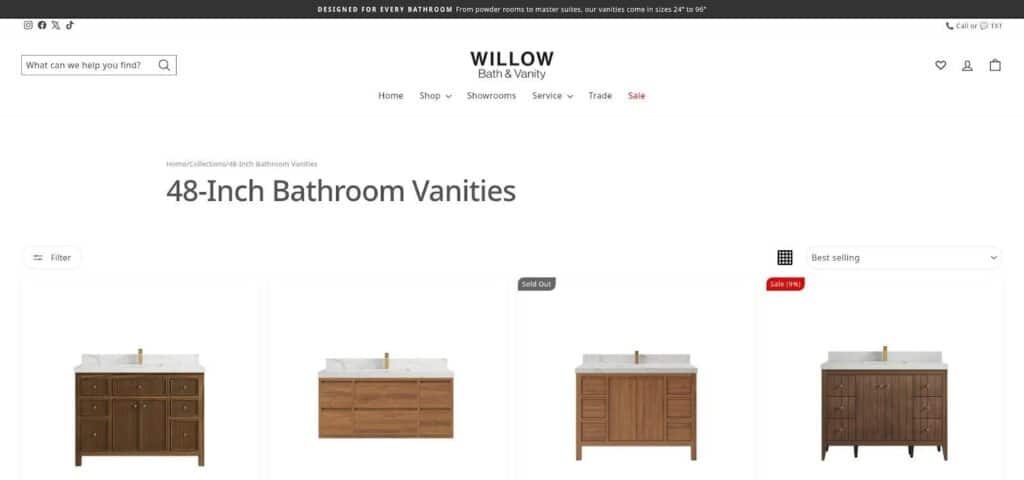
Willow Madison 48 inch dark walnut teak vanity collection screenshot
Because Willow Bath and Vanity ships stock from its Alpharetta, Georgia, warehouse, processing generally takes five to eight business days, and freight adds another five to ten, so most buyers see the crate within roughly two to three weeks—still brisk compared with waiting on an overseas container. The company backs Madison with a one-year limited warranty that covers finish defects and hardware failures, provided you unpack and report any concealed freight damage within 48 hours of delivery.
Willow ships from its Georgia warehouse, skipping import delays and keeping remodels on schedule. The look is transitional: framed doors, tapered legs, and hardware that works with brass, matte black, or chrome faucets. If you spent last night scrolling fixtures on Instagram, this piece plays along.
Build, durability, and daily function
Open the doors and drawers and the construction story gets better. Every panel is teak, not veneer over chipboard. Teak resists bathroom humidity, so you are far less likely to see warping five years in. Corner blocks and pocket screws tie the frame together, and the drawers glide on full-extension, soft-close slides that feel over-engineered for a vanity.
Storage matters. Madison gives you five dovetailed drawers, each deep enough for a hair dryer, plus two double-door bays for towels or bulk bottles. A cut-out keeps plumbing clear so you lose little space to pipes.
Finish quality matches the bones. The dark walnut stain sits under a clear topcoat that wipes clean and stays clear after toothpaste splashes. Hinges and pulls are solid brass and pre-drilled, so swapping hardware is easy.
Weight has a perk. Once you anchor the included brackets to studs, the cabinet stays put and feels custom.
Who will love it, and where Madison falls short
Madison suits homeowners who treat the vanity as the bath’s anchor. Solid wood means you can refinish the surface years from now instead of sending the unit to a landfill, a win for anyone chasing sustainable choices.
The generous drawer stack resolves clutter for couples and gadget fans alike. Downsides? The 190-pound weight demands blocking and a helper on install day, and the price starts around $1,299 for the cabinet only. For flips on a strict budget, one of our mid-tier picks lands softer on the wallet.
Need dual sinks in tight quarters? Madison also comes in a double-bowl layout. For most primary baths, though, the single-sink version balances beauty, storage, and staying power better than anything else we tested.
Eviva “Aberdeen” 48-inch vanity: overview and first impressions
If two people jockey for mirror space each morning, Aberdeen is your fixer. Eviva fits twin undermount sinks into a true 48-inch frame, giving couples room to share without jumping up to a 60-inch cabinet.
You get a turnkey kit: espresso-stained cabinet, polished Carrara marble top, and porcelain basins already set. That ready-to-plumb convenience saves a few hundred dollars on fabrication and keeps remodel timelines tight.
Visually, Aberdeen balances classic and modern. Shaker doors ground the design, while slim bar pulls and a low marble backsplash feel fresh. The medium-dark espresso stain warms white tile yet avoids making small baths feel cramped.
Open the center drawers and you find solid pine boxes with dovetail joints, a pleasant surprise at this price. Soft-close hardware and a solid wood frame add durability; moisture-sealed MDF side panels rein in cost without turning the cabinet into a sponge.
In short, Aberdeen delivers double-sink luxury in a footprint most condos can spare.
Everyday usability and trade-offs
Two bowls in 48 inches feel liberating, but they shrink counter space. Each sink measures about 14 inches wide, leaving narrow ledges for soap and a candle rather than a full skin-care lineup.
Storage helps offset that squeeze. Three deep drawers swallow hair tools and dental kits, while under-sink cabinets stand tall bottles. Drawer interiors are unfinished pine, so a coat of clear sealer is a smart weekend project if you plan to stash damp items.
Marble elevates the look but needs care: seal once a year and wipe spills fast to avoid etching. If that sounds like a chore, budget for a quartz top later; the supplied marble is removable.
Installation is straightforward because the vanity arrives assembled. The heaviest lift is steering a 200-pound unit through a doorway. Plumbing feeds exit through one rear cut-out, so most homeowners can adapt existing lines with standard P-traps.
Net result? Aberdeen lets partners brush side by side without stealing extra floor space. Accept the slimmer counter and marble maintenance, and the daily payoff is worth it.
Deluxe Living “Richfield” 48-inch vanity: overview and first impressions
Farmhouse fans, this is your showpiece. Richfield pairs a white fireclay apron sink with a white-painted cabinet that looks rescued from a century-old farmhouse, then updated for indoor plumbing.
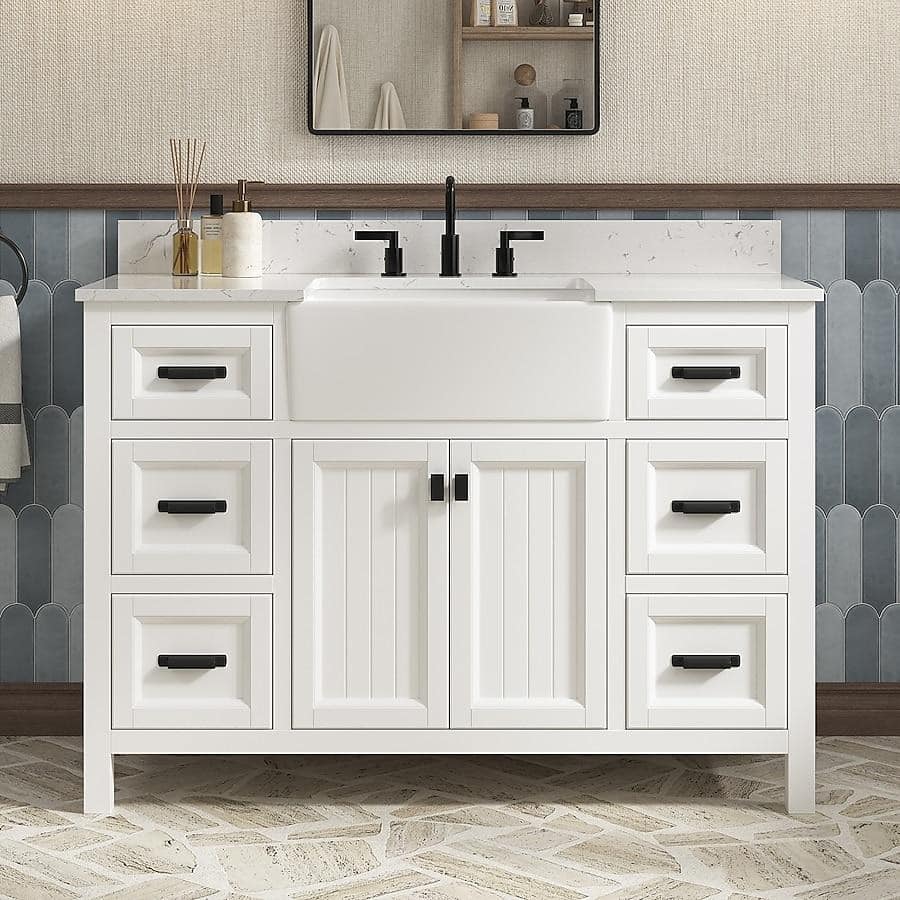
Deluxe Living Richfield 48 inch farmhouse apron-front vanity
The apron front projects an inch past the wood face, giving instant character and freeing you from the grime-catching rims of standard drop-ins. Owners rave about that hygiene win in forums.
Construction is solid oak where it counts—the face frame, door rails, and legs—backed by oak veneer over furniture-grade plywood on the sides to curb weight. At roughly 160 pounds, two DIYers can maneuver it without special gear.
Texture seals the look. Vertical beadboard panels and matte-black cup pulls lean rustic, while the crisp white finish feels brighter than trendy greige paints. Against white shiplap or slate tile, the contrast sings without veering into themed décor.
In short, Richfield delivers farmhouse authenticity in a size urban baths can handle, with real wood details that separate it from mass-produced look-alikes.
Functionality quirks and installation notes
That deep farm sink consumes counter space. Slim ledges on each side fit soap and a toothbrush cup, not a full morning lineup. Plan a wall shelf or medicine cabinet for overflow.
Storage follows the same trade-off. Two deep drawers flank the sink for towels or hair tools, but the center front is fixed to hide the basin. A double-door cabinet below offers decent volume, though the rear third is lost to plumbing. Baskets tame the vertical space.
Weight distribution shifts forward because the sink is a single slab of clay. Confirm a level floor and rough plumbing height; apron basins sit lower, so you may need an offset trap.
Maintenance is simple. Fireclay resists staining, and a mild cleaner keeps it bright. The painted finish carries a clear topcoat that shrugs off splashes, though a quick wipe after showers helps veneer edges last.
Choose Richfield if you value character and a deep, utility-friendly basin over sprawling counter acreage. Plan minor plumbing tweaks, and you gain a focal point guests assume came from a design magazine.
Modway “Render” 48-inch vanity: overview and first impressions
Mid-century style rarely reaches bathrooms intact, but Render gets close. Picture a warm walnut façade with horizontal slats perched on splayed legs that lift the cabinet off the floor and lighten any small room.
The cabinet ships flat-pack, IKEA-style, yet assembly is painless. Side panels click into place, and the leg frame bolts on with pre-threaded inserts. Materials are honest for the price: moisture-sealed MDF wrapped in a consistent walnut laminate that resists peeling better than budget foils. No one will mistake it for solid timber, but the printed grain avoids obvious repeats.
Render arrives as a cabinet only, giving you freedom to pick stone, quartz, or solid-surface tops that match your tile. Pre-drilled faucet holes and an adjustable shelf speed installation once the counter is ready.
In a field of hefty furniture-grade pieces, Render is the accessible style choice: visually light, budget-friendly, and perfect for small baths seeking personality without bulk.
Storage, care, and who should pick Render
Open the slatted doors to find a single wide compartment with an adjustable shelf—ideal for towels or a small trash can, less helpful for tiny cosmetics that tumble into a heap. Because there are no drawers, plan on baskets or dividers if you crave order.
Raised legs make sweeping easy and enlarge cramped rooms, but they also expose plumbing. A sleek chrome P-trap looks intentional; a rusty one does not, so spend the extra few dollars on a decorative kit.
Laminate needs little pampering. A microfiber cloth and mild soap clear dust from the slat grooves, and the finish shrugs off humidity as long as edges stay sealed. Avoid dragging metal toiletries across the surface—deep gouges cannot be sanded like real wood.
Render suits design fans on tight budgets: condo owners, Air-bnb hosts, or anyone chasing a Palm Springs vibe without removing walls. If drawer storage or a factory-installed top ranks higher on your list, our Kubebath or Allen + Roth picks serve you better. Otherwise, enjoy the style lift at a wallet-friendly price.
Kubebath “Bliss” 48-inch vanity: overview and first impressions
Bliss looks like it rolled in from a spa. The cabinet mounts to the wall, leaving about six inches of open air beneath the drawers and making tight baths feel larger.
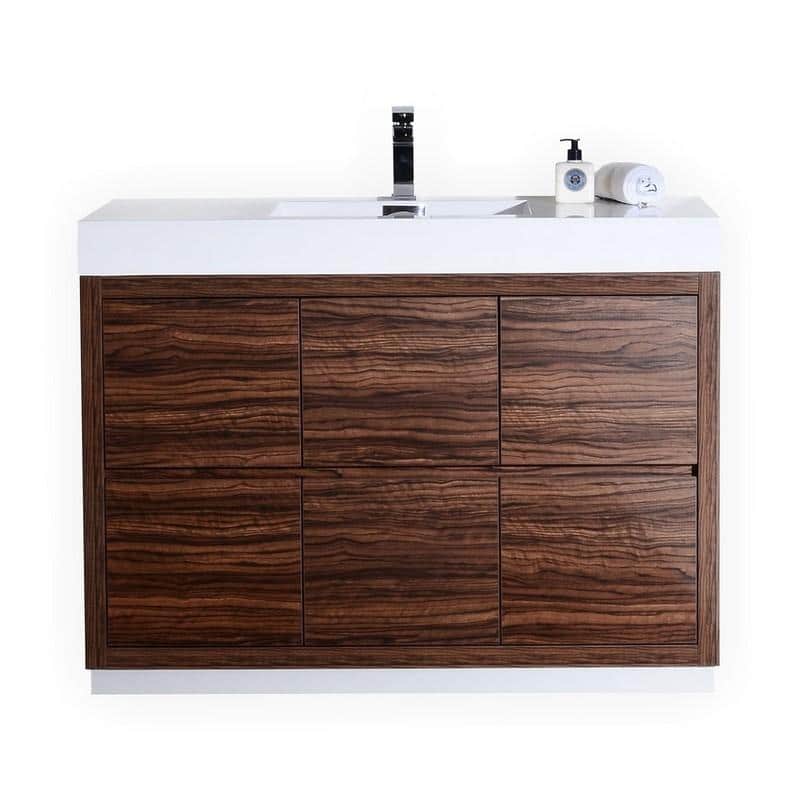
Kubebath Bliss 48 inch floating walnut bathroom vanity
The walnut finish is a textured laminate that hides fingerprints and echoes real grain better than glossy foils found on budget units. At only 18 inches deep, Bliss adds walking space in narrow rooms without giving up its full 48-inch width.
Kubebath sells Bliss as a complete package: soft-close drawer box plus an integrated white acrylic top with overflow. Because the basin is molded into the counter, there are no seams for grime and no caulk lines that yellow over time.
Drawer hardware is touch-latch. Press and the drawer glides out on hidden rails, revealing full-width trays with built-in dividers. The MDF core is moisture resistant; wipe spills promptly and you avoid swelling issues seen in cheaper cabinets.
Installation makes or breaks this pick. Stud blocking or heavy-duty brackets are mandatory, and the unit ships at roughly 140 pounds with the top attached, so plan for a helper. Once secured, Bliss rewards you with a crisp, modern line and a floor that is easier to mop.
Storage, care, and best-fit bathrooms
Two deep drawers swallow towels, hair tools, and spare toiletries. If you keep bulk cleaning products in the vanity, measure first; floating designs lose a bit of vertical space.
Acrylic needs little maintenance. A soft cloth and mild soap handle most messes, and a quick swipe keeps the gloss bright. Avoid abrasive pads that can dull the finish.
Bliss suits design-forward remodels where floor clearance and a slim profile matter: city condos, guest baths, or any space where every inch counts. If you need cabinet doors for tall bottles, look to our Allen + Roth option; if you crave a wood core, Willow’s Madison is the upgrade.
Allen + Roth “Roveland” 48-inch vanity: overview and first impressions
Big-box shopping does not have to mean bland. Roveland proves it with a deep walnut finish, six even drawers, and a genuine Carrara marble top that arrives bolted in place, ready to drop, level, and plumb before lunch.
The frame is solid birch; side panels and drawer bottoms use sealed MDF to control cost. You still get soft-close hardware, finished interiors, and factory touch-ups that hide end-grain seams. At about $1,100 on typical Lowe’s sale pricing, the spec sheet delivers standout value.
Design leans transitional. Clean Shaker rails, brushed-nickel pulls, and a low toe-kick work in modern or classic baths. The marble carries light gray veining, pre-sealed at the factory, and the centered white porcelain sink leaves generous counter space on both sides.
Unbox the cabinet and you will see a cut-out back plus an oversized plumbing notch behind the drawers. Floor or wall supplies slip through without creative carpentry. Weight lands near 200 pounds with the top attached, so plan on a dolly and a helper.
In short, Roveland offers the highest countertop-to-dollar ratio in our lineup and asks only a tube of silicone and a Saturday afternoon to install.
Solid wood vs. MDF: why the cabinet core matters
Water and wood have a love-hate relationship in every bathroom. Solid hardwood and furniture-grade plywood handle humidity far better than medium-density fiberboard. Wood fibers in MDF act like a sponge; once moisture slips through a chipped edge, the panel swells and does not shrink back. DIYers on Reddit’s r/BathroomRemodeling forum share swollen-door horror photos each week, usually ending with the same verdict: “MDF is risky unless every edge is sealed and splashes are wiped fast.”

That warning does not make MDF a universal deal-breaker. Engineered cores help brands hit lower price points and produce flawless painted finishes—two reasons MDF side panels appear even in mid-tier vanities like Aberdeen and Roveland. The smart hierarchy is solid wood for frames and drawer fronts where screws bite, with plywood or sealed MDF reserved for low-stress zones.
Our advice is clear. If the bathroom is well ventilated and budget leads the list, a mixed-material cabinet is a practical trade-off. If kids treat the vanity like a splash zone or you expect a 15-year service life, invest in all-wood or at least plywood boxes and sleep easier when someone forgets to wipe the puddle.
Finish and walnut tone: reading color, sheen, and sealer labels
Not every “walnut vanity” comes from a walnut tree. Many are birch, teak, or MDF wrapped in a walnut veneer. That can work if the topcoat does the heavy lifting. Look for catalyzed lacquer or conversion varnish in the specs; both cure hard and shrug off steam better than standard polyurethane.
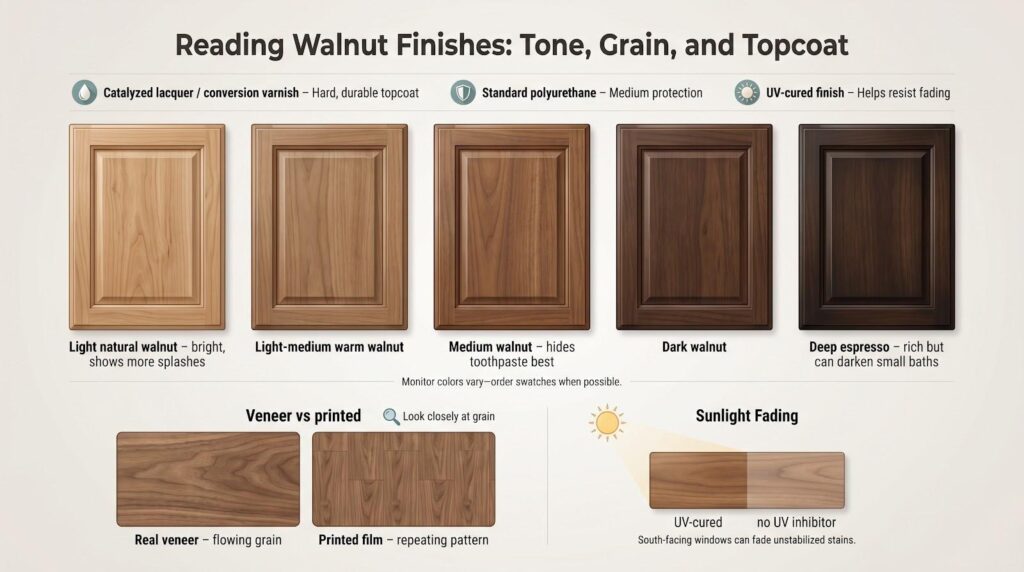
Color counts. Manufacturers offer everything from pale natural stains to near-espresso tones. Because monitors distort hue, order a swatch or visit a showroom if undertone accuracy matters. A medium walnut hides toothpaste splatter better than chocolate brown and will not darken a small bath like the deepest stains.
Grain direction reveals authenticity. On real veneer the pattern flows across door rails and drawer fronts, while printed PVC repeats in tiles. Printed film is acceptable for budget pieces, but choose genuine veneer if you crave natural variation.
Check for UV inhibitors in the finish. Bathrooms with south-facing windows can fade unstabilized stains, leaving drawers lighter than doors within two years. A label that reads “UV-cured finish” is a safe bet.
Spend two minutes decoding finish notes and you avoid the common surprise of a vanity that looks perfect under store lights but shifts to orange or black-coffee tones once installed.
Single sink or double? Making 48 inches work for two
At 48 inches, a vanity straddles the line between personal station and shared workspace. Two sinks give partners elbow room, but counter real estate shrinks fast.
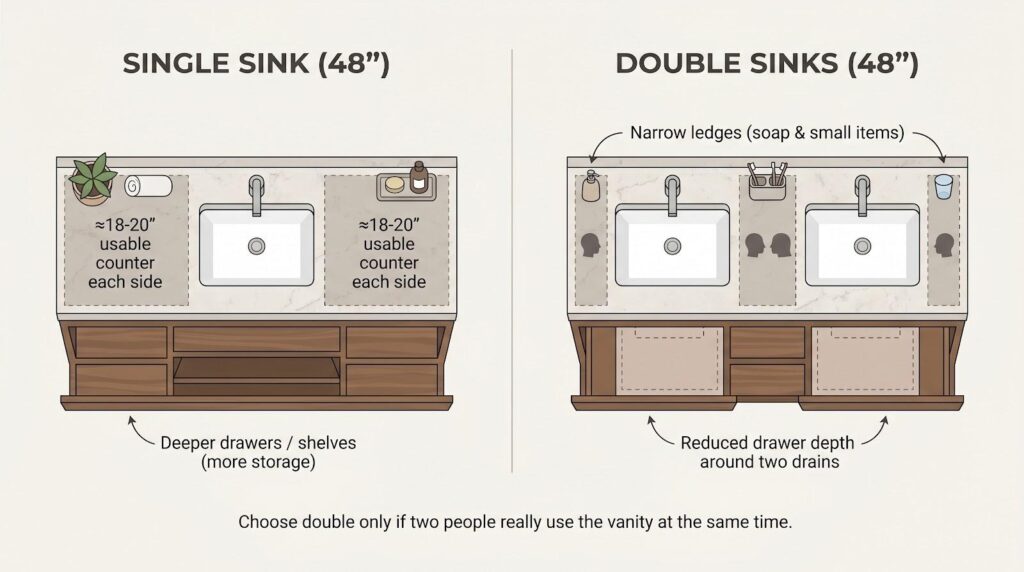
A double layout divides the surface into three zones: soap slot, soap slot, and a narrow strip down the center. Handy for side-by-side brushing, less ideal for spreading out makeup or a hair dryer. Drawer depth also drops because plumbing must dodge two traps; many brands replace one deep bank with shallow center drawers, as you saw on Aberdeen.
Choose a single bowl and you reclaim roughly 18–20 inches of uninterrupted space on each side—prime territory for skin-care trays, a plant, or a marble canister set. Storage improves too. With one drain to navigate, manufacturers can run tall U-shaped drawers or full-depth shelves that swallow cleaning supplies.
Ask one question: do two people brush at the same time every morning? If yes, accept the slimmer counter and go double. If schedules rarely overlap, a spacious single sink feels roomier every other hour of the day. Either way, verify rough-in heights before ordering; nudging supply lines costs little, moving the cabinet later can blow the budget.
Measure twice, haul once: space and plumbing checkpoints
A 48-inch cabinet is rarely a true 48. Most tops overhang the box by about half an inch on each side, so the real span lands closer to 49. Use a tape measure and confirm at least 49½ inches between walls, trim, or shower glass. Add another inch if the bathroom door swings past the vanity to prevent bruised knuckles and chipped paint.
Depth matters too. Standard units sit 21–22 inches deep, but floating models like Bliss trim to 18. In tight hall baths, that four-inch diet can be the difference between walking past and bumping a drawer.
Plumbing is the stealth spoiler. Measure from finished floor to the center of the drain and from the side wall to the same point, then compare those numbers with the spec sheet. If the back panel lands lower than your trap, you will wrestle gravity or cut wood—neither is fun on install day.
Give supply lines some attention. Drawer-heavy designs often expect feeds in the wall, not the floor. An offset shut-off valve corrects small misalignments; a full relocation requires a plumber and a larger budget.
Do the math now. It spares you drywall surgery later and turns delivery day into unwrapping instead of troubleshooting.
Storage strategy: matching drawer layouts to real-life clutter
Open shelves look dreamy in staged photos but demand either monk-level minimalism or matching baskets. Before falling for a pretty render, check what actually lives under your sink right now. Tall bleach bottles? Hair tools? A pile of travel-size lotions?
Drawer-heavy designs like Madison corral small items and keep daily essentials organized. Deep lower drawers can even hold a full-size hair dryer standing on its nozzle. Read the spec sheet for internal height; some drawers hide plumbing cut-outs that steal the top third of space.
Door cabinets shine when you store bulk items such as extra toilet paper, cleaning sprays, or a humidifier you use once a year. Add a pull-out caddy and they outperform shallow drawers every time.
Floating vanities trade cubic inches for floor clearance. Bliss stays competitive with two oversized drawers, but if you stash family-size shampoo jugs, plan a nearby linen tower.
Bottom line: match the cabinet interior to your personal clutter. The prettiest vanity turns frustrating fast if the only spot for mouthwash is the counter. Measure bottles, check drawer heights, and let function guide style.