Outdoor decks are one of the most enjoyable spaces in a home. They create a place for relaxing, entertaining guests, and spending time outdoors with family. However, decks are often elevated and visible from nearby homes. This visibility can reduce the feeling of privacy that many homeowners want when using their outdoor space.
Deck privacy panels help solve this problem by creating a visual barrier around the deck. They block unwanted views, reduce distractions from nearby properties, and make the deck feel more comfortable and enclosed. When designed properly, deck privacy panels also enhance the appearance of the home while maintaining airflow and light.
Understanding how privacy panels work and how they should be installed can help homeowners choose the right option for their deck.
Table of Contents
Why Deck Privacy Panels Are Becoming More Popular
Many modern neighborhoods have homes built close together. Elevated decks can overlook neighboring yards or windows, making outdoor gatherings feel exposed.
Deck privacy panels create separation between properties while still allowing homeowners to enjoy the open feeling of an outdoor space. They provide a sense of enclosure without completely closing off the deck.
Privacy panels also help reduce distractions from nearby streets or walkways. Instead of seeing passing traffic or neighbors’ backyards, homeowners can focus on their own outdoor environment.
For homeowners looking for strong screening around their outdoor space, privacy aluminum fence panels can be adapted to function as deck privacy panels while maintaining a clean architectural appearance.
Full Privacy vs Semi Privacy Deck Panels
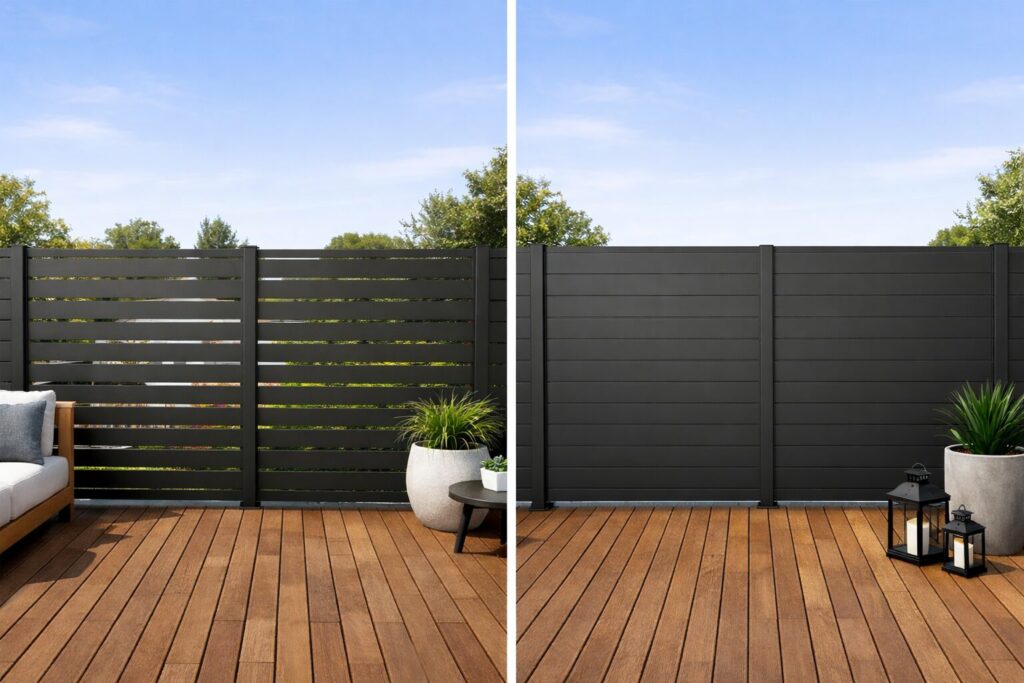
When installing privacy panels around a deck, homeowners generally choose between semi privacy and full privacy designs.
Semi privacy panels include small gaps between horizontal slats. These openings allow airflow and natural light to pass through the structure. This design keeps the deck feeling open while still providing a degree of visual separation.
Full privacy panels remove the gaps entirely. The surface becomes solid, which blocks views from neighboring properties and creates maximum screening.
Both options can work well on a deck. The decision often depends on how exposed the deck is and how much privacy the homeowner wants.
For homeowners who want additional structural rigidity while maintaining full screening, privacy plus aluminum fence panels provide a reinforced configuration that works well for privacy applications.
Deck Privacy Panels and Airflow
Decks are designed as outdoor living areas, so airflow is important. Proper ventilation keeps the space comfortable during warm weather and prevents the area from feeling enclosed.
Semi privacy panels allow air to move through the slats, which helps maintain ventilation across the deck. This can be particularly useful in areas where wind exposure is higher.
Full privacy panels provide stronger screening but block airflow more completely. In many backyard environments this works well, especially when the deck is surrounded by landscaping or nearby structures.
Homeowners who want a balance between privacy and airflow often choose semi privacy aluminum fences when designing deck privacy panels.
Matching Deck Privacy Panels With Railings
Deck privacy panels should complement the design of the deck railing system. Many homeowners install privacy panels on one or two sides of the deck while leaving other sides open.
This approach maintains views of the yard while still blocking direct lines of sight from nearby homes. Panels are commonly installed on the sides of the deck that face neighboring properties.
Matching the color and finish of the panels with the railing system creates a cohesive design. Horizontal slat panels are particularly popular because they align well with modern architectural styles.
When privacy panels and railings share the same material and finish, the deck appears more integrated with the rest of the home.
Adding Gates and Access Points
Some deck layouts include stairs that lead directly into the backyard. In these cases, access points may require a gate that matches the privacy panels.
A gate allows homeowners to control entry to the deck area while maintaining the same visual style as the surrounding panels.
For example, homeowners installing privacy fencing around elevated deck areas may include aluminum gates that match the design of the slats and structural elements.
This keeps the overall design consistent while maintaining functionality.
Privacy Panels and Outdoor Design
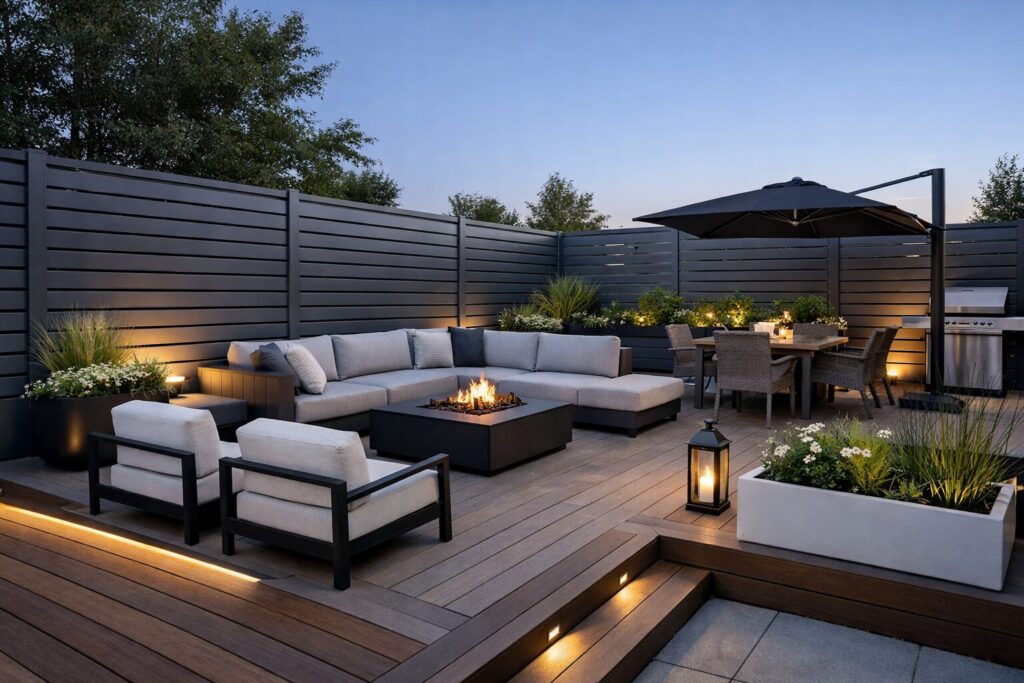
Deck privacy panels do more than block views. They also contribute to the overall design of the outdoor space.
Many homeowners combine privacy panels with planters, lighting, pergolas, or outdoor furniture to create a comfortable outdoor room. The panels act as the backdrop for these elements, helping define the space visually.
Horizontal slat designs are especially popular because they create clean lines that match modern architecture. Neutral colors such as black, grey, or natural wood tone finishes often complement a wide variety of home styles.
When integrated with landscaping and lighting, privacy panels can transform an ordinary deck into a private outdoor retreat.
Maintenance and Durability
Deck structures are constantly exposed to sun, rain, and temperature changes. Choosing durable materials for privacy panels helps ensure long term performance.
Wood panels often require repainting or staining over time. They can also warp or crack as moisture levels change.
Aluminum privacy panels resist these issues. They do not absorb water, and their protective finishes help maintain appearance for many years. Cleaning usually involves simple washing to remove dust or debris.
For homeowners who want a low maintenance solution, aluminum deck privacy panels provide long lasting durability with minimal upkeep.
Questions Homeowners Should Consider
Before installing deck privacy panels, homeowners should consider several important questions.
Which side of the deck needs privacy from neighbors.
Do you want full screening or partial airflow?
Will the panels match the deck railing design?
Is a gate needed for deck access?
How will the panels affect sunlight and airflow on the deck?
Answering these questions helps determine the best configuration for the space.
Conclusion
Deck privacy panels can transform an exposed outdoor platform into a comfortable and relaxing space. By blocking unwanted views and defining the edges of the deck, they create a more enjoyable environment for homeowners and guests.
Whether you choose semi privacy designs for airflow or full privacy panels for maximum screening, the key is selecting a system that complements the deck and the surrounding landscape. When thoughtfully designed, privacy panels improve both the functionality and appearance of your outdoor living space.