Change orders are where construction budgets go to die. Most homeowners know this by the time they’re through a major build — but by then it’s too late. The changes that eat money fastest are usually the ones that could have been caught in planning, if only someone had spotted the problem before the walls went up.
A lot of those problems start with drawings. Not bad drawings — technically accurate ones that simply don’t communicate what most people need to know. Floor plans show where walls sit. They don’t show what it feels like to stand in the room. Elevations show window positions. They don’t show how much light those windows actually bring in. The plan is right, the build is right, and the homeowner is still surprised.
That surprise is expensive.
Table of Contents
The Gap Between Drawings and Reality
Technical drawings exist to build from. That’s their job and they do it well. The problem is when they also become the primary tool for making decisions — and the person making those decisions isn’t trained to read them.
Most homeowners can’t tell from a floor plan whether the kitchen island leaves comfortable working space or whether it’ll feel cramped once you’re actually in the room. They can’t tell from an elevation drawing whether the ceiling height in the living area feels generous or just adequate. They approve designs based on a general sense of what the plan shows, and then reality arrives during construction.
At that point, changes cost real money. Moving a wall mid-build isn’t a sketch revision. It involves trades, materials, structural implications, and time. The earlier a problem gets caught, the cheaper it is to fix — but catching it early requires understanding the design clearly, not just approving a set of drawings.
This is where visual tools earn their keep.
What 3D Visuals Let You See Before Work Starts
The value of working visually before construction begins comes down to one thing: you can test decisions before they’re locked in.
Want to know if the open-plan layout actually flows well between the kitchen and the living area? You can walk through it digitally. Wondering whether the massing of the new extension will look right from the street, or whether it’ll feel too heavy next to the existing house? A model shows you before a single foundation is poured.
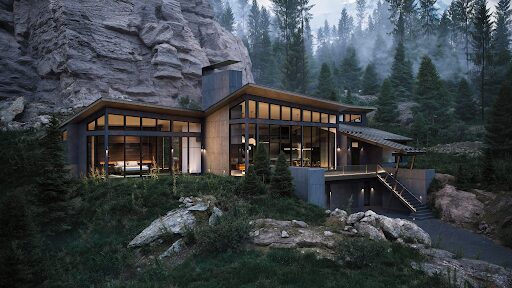
At the planning stage, 3D architectural modelling can make structure, layout, and design intent much easier to understand than drawings alone. You see the building at human scale, with real proportions, in context. Rooms look like rooms instead of rectangles. Ceiling heights register correctly. The relationship between spaces becomes readable.
For homeowners, this means making decisions from a position of actual understanding rather than optimistic guesswork. For builders and project managers, it means fewer conversations mid-site that start with “I thought it was going to look like…” — conversations that tend to end with change orders.
The Projects Where This Matters Most
Custom Homes
A custom home is probably the biggest financial commitment a family will make. The design phase is also the cheapest phase — changes on paper cost nothing, or close to nothing. Changes during construction cost significantly more. Changes after completion sometimes aren’t even possible.
Reviewing a custom home design in three dimensions gives buyers and homeowners the chance to genuinely evaluate what they’re committing to. Room proportions, flow between spaces, how daylight enters the main living areas, where the outdoor connection works and where it doesn’t — all of this becomes visible before a foundation is laid. If something isn’t right, that’s the moment to change it.
Renovations
Renovation projects have a specific problem: people can’t always picture how a space will look after a structural change, because they’re too familiar with how it looks now. Remove a wall that’s been there for twenty years and the homeowner needs to genuinely imagine the room without it — and imagination doesn’t always do that job reliably.
Showing a renovation concept visually before work begins helps owners commit to the right decisions at the right time. Do they want to open up the kitchen? Show them what it looks like both ways before the structural engineer gets involved. Does the bathroom feel large enough with the proposed layout? Check it in the model before the plumber sets the drain locations.
Projects with Multiple Stakeholders
More people, more opinions, more opportunities for misalignment. When a couple, a family, or a development team with investors all need to agree on a design, differing mental images of the same drawing create friction downstream.
A shared visual reference gives everyone the same starting point. Disagreements surface earlier, when resolving them is straightforward. Much better than discovering mid-build that two key decision-makers had fundamentally different expectations of what was being built.
When the Visual Becomes a Marketing Tool
Not every project is for the person who commissioned it. Developers building homes, commercial teams leasing office space, landlords repositioning retail — these groups regularly need to generate interest and commitment from buyers or tenants before the building exists.
Selling something that doesn’t yet exist is hard. Describing it doesn’t work well. Showing people a construction site photo with a promise attached to it doesn’t inspire much confidence. The most effective approach is showing what the finished building will actually look like, in a form that’s realistic enough for someone to genuinely evaluate it.
For projects that need to be presented before completion, real estate rendering services can help explain the finished vision to buyers, investors, and decision-makers. A developer pre-selling apartments can show buyers a finished lobby, a typical unit, and a rooftop amenity space that hasn’t been built yet. A commercial team can show prospective tenants a spec suite interior rather than a bare concrete shell. The project becomes real enough to commit to.
Starting that process before handover also matters commercially. Waiting until completion to begin marketing means missing the window when buyer demand and media attention are at their peak. Pre-construction marketing — backed by visuals that actually communicate the finished product — lets teams build pipeline during the build, not after it.
What to Include in a Pre-Construction Visual Package
The specific visuals that matter most depend on the project, but a few categories tend to be useful across most builds.
Street-level exterior views. How the building looks from the pavement — its form, entrance, relationship to neighbouring properties — is the first thing planning committees, neighbours, buyers, and investors want to see. One good exterior perspective from pedestrian eye level does a lot of work.
Key interior spaces from realistic positions. Not aerial views or architectural compositions. The main living area shown from the doorway. The kitchen from the position where someone stands to cook. The views that reflect how people actually move through and use the space. These are the images that help homeowners confirm they’re getting what they expect.
Site layout for larger projects. For developments, extensions, or anything where the relationship to the surrounding site matters — car access, landscaping, distances to neighbouring buildings — a site plan or aerial view fills in context that individual space views can’t.
Circulation and connection between spaces. On residential projects, showing how rooms link together is often the most useful thing a visual package can do. Which rooms connect to outdoor space? How does the upper floor relate to the ground floor? Where does the natural light go? These are the questions drawings raise but rarely answer clearly.
Visuals Support Planning — They Don’t Replace It
Worth saying plainly: 3D models and renderings don’t substitute for proper construction drawings, structural engineering, or accurate cost planning. A rendering isn’t a building specification. It doesn’t tell the contractor how to build — it helps everyone understand what’s being built.
That distinction matters. Use visual tools for what they’re good at — making designs clear to non-specialists, supporting decisions before they’re locked in, marketing projects before they’re complete. Keep the technical documentation doing its job separately.
When those two things work alongside each other, projects run better. The technical team has the accuracy they need. The homeowners, buyers, and investors have the clarity they need. And fewer conversations end with “that’s not what I thought we were building.”
That’s not a small thing. In construction, it’s often the difference between a smooth project and a costly one.