In short, industrial weighing systems are by no means “only” weighing tools. They can therefore play an important role in efficient, compliant, and cost-effective manufacturing.
It is in the interests of producers, then, to take some time to determine the weighing equipment that is likely to most help them uphold quality, control costs, and satisfy the demands of 21st-century supply chains. Accurate measurement underpins many successful manufacturing operations. Weighing equipment from RS, encompassing such options as platform scales, bench scales, and counting scales, can provide manufacturers with practical solutions for measuring materials, components, and products across a range of applications.
From raw material intake to final packaging, precise weight data supports efforts to achieve the best possible product quality, process efficiency, regulatory compliance, and cost control.
Well-chosen industrial weighing systems, then, can be crucial investments for organisations in sectors such as food and beverage, pharmaceuticals, chemicals, automotive, and aerospace, as they look to maintain consistency and competitiveness.
Table of Contents
Why Does Weighing Matter So Much in Modern Production?
Across a variety of industries like those cited above, there is a need to measure materials accurately at different stages of production. In line with this, weight is a crucial manufacturing parameter.
After all, even seemingly modest discrepancies can equate to significant gaps when they are repeated across thousands of products or batches.
Accurate weighing, then, can help manufacturers with such processes as:
- Maintaining consistent product specifications
- Controlling quantities of raw materials
- Minimising material waste
- Supporting quality-control efforts
- Verifying finished products before dispatch
- Monitoring stock and inventory
- Optimising production efficiency
- Identifying potential process problems
It is, of course, the specific application that will dictate the exact requirements an organisation has from weighing (and therefore the weighing equipment it will need to go about acquiring).
There may be a need for especially precise weight measurements in a laboratory or quality-control environment. On the other hand, a production facility handling heavy components might be much likelier to prioritise capacity, durability, and ease of use.
The Key Applications of Industrial Weighing Systems Across Manufacturing
Common uses of industrial weighing equipment include:
- Ingredient dosing and batching: when solids, powders, or liquids are precisely measured, this can greatly help ensure consistently high-quality recipes. This is especially crucial in food, pharmaceutical, and chemical production.
- Checkweighing and fill control: in-line or end-of-line systems can verify package weights against specified targets and help manufacturers control fill quantities. When used as part of an appropriate weighing and quality-control process, they can support compliance with applicable weights-and-measures requirements.
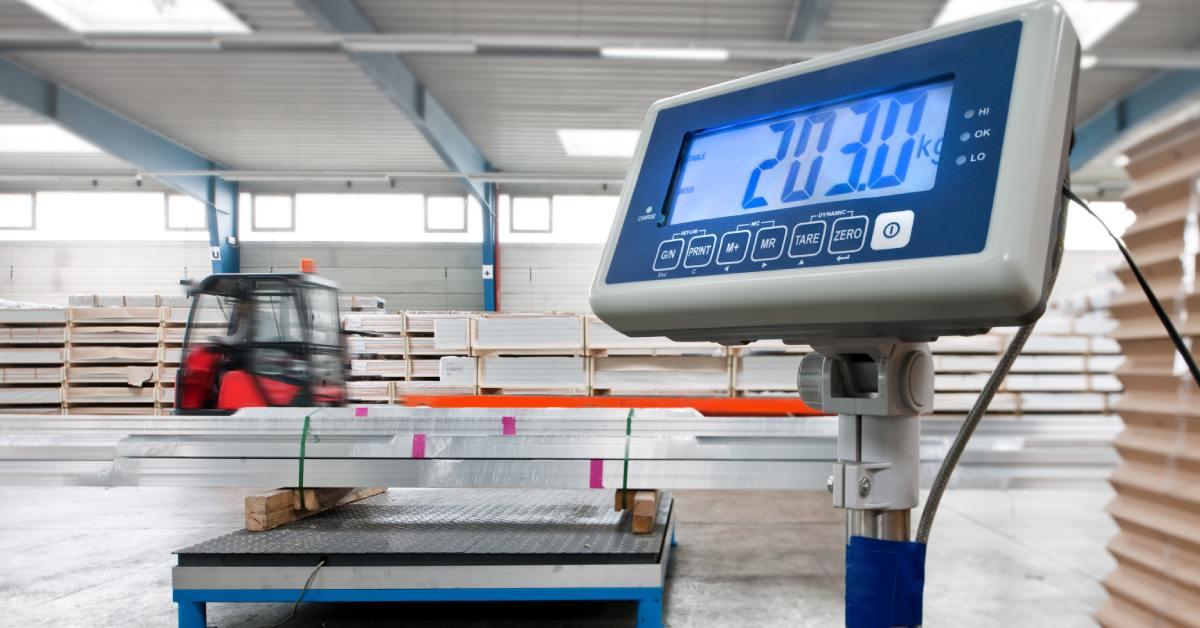
- Platform and floor scales: these systems are used for the heavy-duty weighing of pallets, bulk containers, or finished products for shipping, inventory, and goods-inwards checks.
- Silo, tank, and hopper weighing: weighing systems using load cells can continuously monitor the mass of material held in bulk storage vessels, helping manufacturers track inventory and material consumption.
- Conveyor and dynamic weighing: these systems measure products or material while they are moving, without necessarily requiring the production line to be stopped.
- Piece counting and quality control: counting scales and precision balances can be valuable for the weighing of components and finished items alike.
Choosing And Implementing the Right Industrial Weighing Solution
Inevitably, the question of which industrial weighing equipment a particular organisation should purchase will hinge on such aspects as capacity, the required accuracy, and the environment in which the system will be used.
Decision-makers are also likely to factor in resolution/readability, weighing platform dimensions, speed, connectivity, hygiene requirements, and other aspects as they compare their options for weighing systems.
Leading suppliers offer a wide range of weighing equipment, including products with calibration options and models designed for industrial applications. This can help ensure a given customer makes the right choice according to their budget and application.