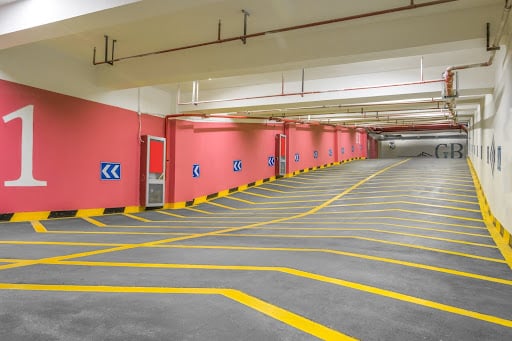
Parking lots may seem like any pavement, but in reality, they function as busy spaces where vehicles and pedestrians constantly move. This means that when a parking lot begins to deteriorate, safety problems appear quickly, leading to cracks, potholes, uneven surfaces, and faded markings that can confuse drivers and increase the risk of trips, falls, or vehicle damage.
However, proper parking lot paving helps prevent these issues before they become hazards. This article will look into these measures and how they improve safety for both drivers and pedestrians.
Table of Contents
Smooth Surfaces Reduce Vehicle Hazards
One of the most important safety benefits of parking lot paving is how it creates a smooth, stable surface that allows vehicles and pedestrians to move without unexpected obstacles. When asphalt deteriorates, it develops cracks and potholes that can cause drivers to swerve or stop suddenly, especially in busy commercial areas with constant traffic flow.
However, a properly paved parking lot eliminates these distractions by providing a consistent driving surface that allows motorists to focus on traffic patterns and pedestrian movement.
In addition, pedestrians can also benefit significantly from smooth pavement, because uneven surfaces can easily cause someone to trip, particularly in areas where people are carrying shopping bags, pushing carts, or walking between tightly parked vehicles.
When the pavement is even and structurally sound, pedestrians can move confidently through the parking lot without constantly watching the ground every time. The durability of asphalt also contributes to long term safety, as quality paving ensures that the pavement can withstand vehicle weight, temperature changes, and daily wear without quickly developing structural weaknesses that lead to potholes.
Clear Markings and Traffic Organization Improve Visibility
Another important safety advantage of parking lot paving is the ability to clearly organize traffic patterns and pedestrian pathways through visible pavement markings. These markings are far more effective on freshly paved asphalt, as the smooth, dark surface provides a strong contrast for paint and reflective materials.
This contrast makes it easier for drivers to identify parking spaces, directional arrows, stop bars, and pedestrian crosswalks. When these markings are bright and clearly defined, drivers can quickly understand how traffic should flow, which reduces confusion and sudden decisions that can lead to accidents.
For instance, professionals who work as asphalt paving contractor in New Jersey often emphasize the critical importance of proper pavement preparation before striping begins. Without a smooth, stable asphalt base, paint markings can fade unevenly or become distorted by cracks and surface damage, making them harder for drivers to follow.
Pedestrian crosswalks also benefit greatly from this clarity, as well, because when crosswalks are bold and easy to see, drivers are more likely to slow down, and pedestrians feel more confident crossing driving lanes.
Better Drainage Reduces Slips and Stagnant Water
Drainage is another factor that significantly affects parking lot safety, yet it is often overlooked until problems appear. Poor drainage allows water to accumulate on the pavement surface, creating slippery conditions for both drivers and pedestrians.
Likewise, stagnant water can cause vehicles to lose traction when braking or turning, particularly during heavy rain. Even shallow puddles can hide potholes or cracks beneath the surface, which increases the risk of tire damage or sudden vehicle movement.
This is why parking lot paving addresses such a problem by carefully shaping the pavement surface so that water flows toward designated drainage points rather than remaining on the asphalt. Proper grading ensures that rainfall moves quickly away from driving lanes and pedestrian areas.
For pedestrians, effective drainage reduces the likelihood of slipping on wet pavement or stepping into hidden puddles. It also prevents the formation of icy patches in colder climates, which can become serious hazards during winter.
Over time, good drainage also protects the pavement’s structural integrity, as water that remains trapped beneath the asphalt weakens the base layers and eventually leads to cracking and potholes.
Endnote
Parking lots are often the first and last part of a property that visitors experience, and their safety depends heavily on the condition of the pavement beneath their feet and tires. Hence, investing in quality paving and maintenance ultimately helps property owners create spaces where traffic flows naturally and people can move confidently.