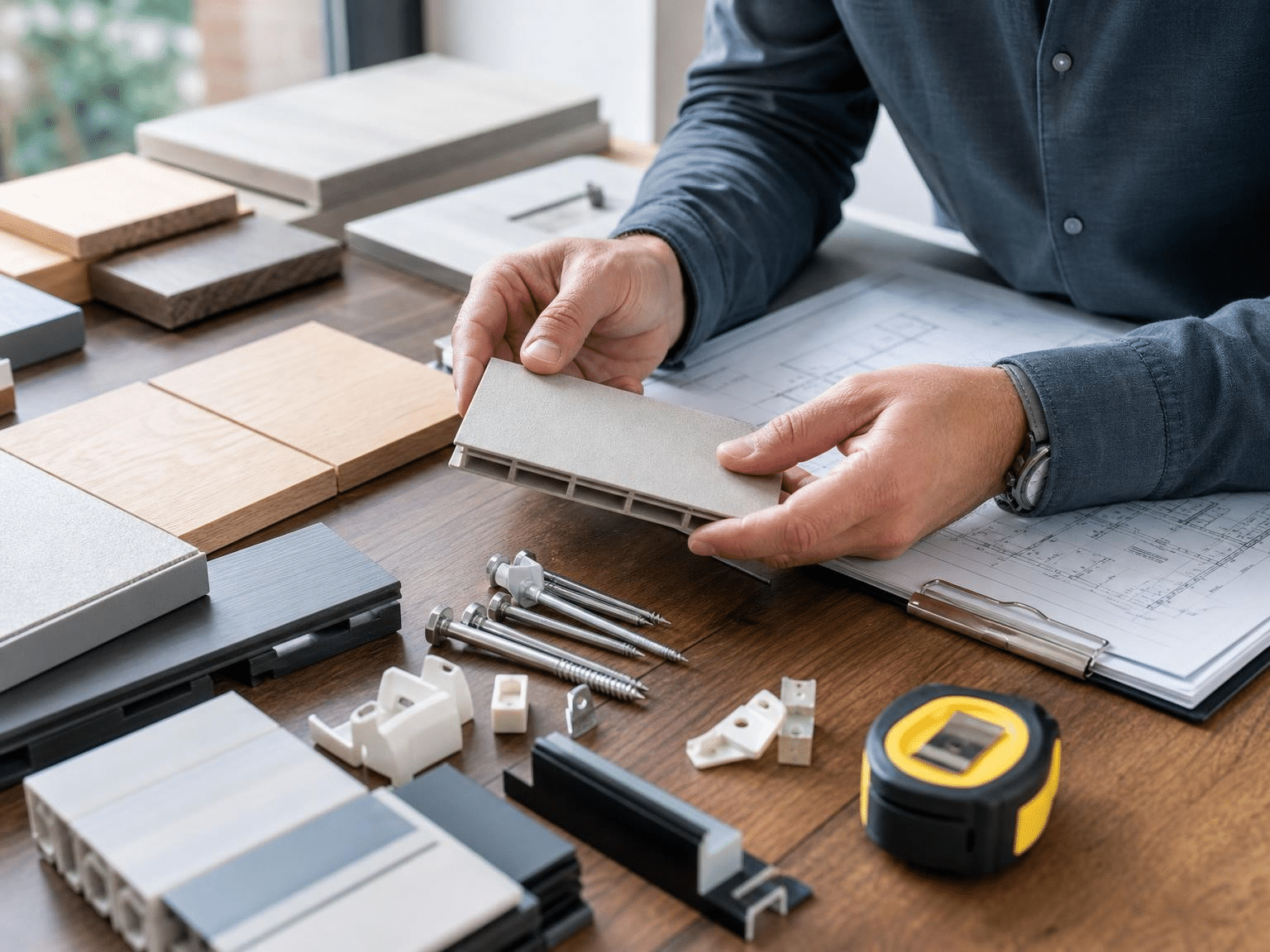
Every material decision made during a building project sends ripples outward—into structural performance, maintenance schedules, safety compliance, environmental impact, and the total cost of a structure over its lifetime. A door hardware component, a wall panel, a drainage fitting—each carries consequences that extend well beyond its sticker price. Injection molding for building and construction projects, for instance, is one manufacturing approach used to produce consistent, dimensionally accurate components. But like any method, its suitability hinges entirely on the application, the exposure conditions, and the performance demands at hand. No single material or process is universally “best.” The right choice comes down to matching a product’s real-world behavior with the conditions it will actually face.
Why Material Selection Matters
Every material decision made during a building project sends ripples outward—into structural performance, maintenance schedules, safety compliance, environmental impact, and the total cost of a structure over its lifetime. A door hardware component, a wall panel, a drainage fitting—each carries consequences that extend well beyond its sticker price. Injection molding for building and construction projects, for instance, is one manufacturing approach used to produce consistent, dimensionally accurate components. But like any method, its suitability hinges entirely on the application, the exposure conditions, and the performance demands at hand. No single material or process is universally “best.” The right choice comes down to matching a product’s real-world behavior with the conditions it will actually face.
Table of Contents
Define the Requirements Before Comparing Materials
Before you start comparing specific products, build a performance brief. Pin down the intended function and load requirements, whether the component lives indoors or out, and what it will be up against—moisture, chemicals, sunlight, heat, cold. Note the expected service life, how it will be installed, how it needs to work alongside surrounding materials, and what appearance is required.
A material’s laboratory properties describe how it behaves under controlled conditions—not necessarily how it performs once it’s installed as part of a complete assembly. Application conditions often matter more than a material’s general reputation.
Start with the application—checklist:
– What load, impact, or stress will this component experience?
– Will it face sustained moisture, UV exposure, or temperature swings?
– What is the expected service life?
– How will it be installed, fastened, and maintained?
– What finish or appearance is required?
Evaluate Core Performance Characteristics
Strength, Impact, and Dimensional Stability
Compressive, tensile, flexural, and impact performance don’t translate evenly across different components. A material that’s strong under one type of load may fall short under another. Dimensional stability—shaped by temperature swings, moisture absorption, manufacturing tolerances, and repeated loading—determines whether a part keeps fitting and functioning correctly years down the line.
Weathering and Environmental Resistance
Outdoor components have to stand up to ultraviolet exposure, water, humidity, freeze-thaw cycling, corrosive environments, and cleaning chemicals. Durability depends on both the material’s formulation and how the product is designed. Rather than leaning on broad marketing claims, look at accelerated-weathering data, warranty conditions, and documented field performance.
Fire, Health, and Safety Considerations
Fire performance, smoke characteristics, and chemical emissions matter—how much depends on the application. Material-level data doesn’t automatically carry over to a finished assembly. When safety requirements are significant, always consult applicable building codes, product certifications, and qualified professionals; generic specifications found online are no substitute for a project-specific code review.
Compare Total Cost, Not Only Purchase Price
Total cost of ownership tells you far more than the initial price tag ever could. Relevant categories include:
- Material and manufacturing cost
- Transportation and storage
- Installation labor
- Inspection and testing
- Routine maintenance
- Repairs and eventual replacement
- End-of-life handling
Consider a simplified scenario: a cheaper component that needs replacing every few years can end up costing more over time than a pricier option with lower maintenance and a longer expected lifespan—provided that durability is backed by verified test data, not just assumption.
Consider Manufacturing Quality and Consistency
Repeatability matters for any component produced at scale. Look closely at dimensional tolerances, material traceability, process controls, inspection procedures, defect detection, and consistency from one production batch to the next. For molded components in particular, tool and part design, wall thickness, shrinkage, warping, gate placement, and assembly interfaces all shape the final quality.
Here’s a practical example: poor tolerances on an exterior fitting can keep it from seating properly against adjoining materials, leaving gaps that trap water and speed up failure. That’s an installation problem rooted in manufacturing precision—not a flaw in the base material itself.
Assess Sustainability Across the Product Lifecycle
A proper environmental evaluation looks beyond recycled content or manufacturing energy alone. It should span raw material extraction, manufacturing energy and waste, transportation, installation, service life, maintenance, and eventual reuse, recycling, or disposal. Designing for durability, adaptability, and disassembly can meaningfully cut down on waste. The EPA points to source reduction, reuse, recycling, and lifecycle thinking as key strategies for managing construction and demolition materials, and frameworks such as NIST’s BEES tool evaluate environmental and economic performance across manufacturing, transportation, installation, use, and end-of-life stages.
Questions to ask about lifecycle impact:
– Is the product designed for a long service life?
– Can damaged parts be replaced individually?
– Can the material be separated at end of life?
– Is credible lifecycle data available?
Be wary of materials marketed with vague, unsupported claims like “green” or “zero waste” that aren’t backed by documentation.
Verify Standards, Testing, and Documentation
Standards and test reports make it possible to compare products on equal footing. Review applicable building codes, specifications, test methods, certifications, and—where relevant—Environmental Product Declarations, along with installation and maintenance instructions. ASTM publishes standardized practices for plastics and molded materials, including methods for producing consistent test specimens, which helps ensure comparisons are truly apples-to-apples.
A test result only means something if the method actually reflects the intended use. Confirm the exact product version tested, the test conditions, pass/fail criteria, the report date, the issuing organization, and whether the testing was conducted independently.
Account for Installation and Real-World Use
Even a well-designed material can fail if it’s installed incorrectly, paired with incompatible fasteners or adhesives, given inadequate drainage, fitted with improper tolerances, exposed beyond its rated conditions, or left without proper maintenance. An exterior component might sail through laboratory testing and still deteriorate early if water gets trapped around its installation point. Always evaluate the complete system—not just the isolated component.
A Practical Material-Selection Framework
A concise process can guide most decisions:
- Define the application and exposure conditions.
- Identify mandatory safety and code requirements.
- Compare relevant, verified test data.
- Estimate installation and lifecycle costs.
- Review maintenance and replacement needs.
- Examine lifecycle and end-of-life considerations.
- Verify documentation with qualified professionals.
Keeping a record of your assumptions along the way helps ensure that competing options are compared fairly.
Choose for the Whole Service Life
Responsible material selection means balancing performance, safety, cost, manufacturability, maintenance, and lifecycle impact. No material should be chosen simply because it’s cheap, familiar, or marketed as sustainable. When the stakes on a project are high, lean on documented evidence and bring in qualified architects, engineers, code officials, or product specialists. At the end of the day, the strongest material choice is usually the one that stays fit for purpose throughout its expected service life—while keeping maintenance and end-of-life demands manageable.