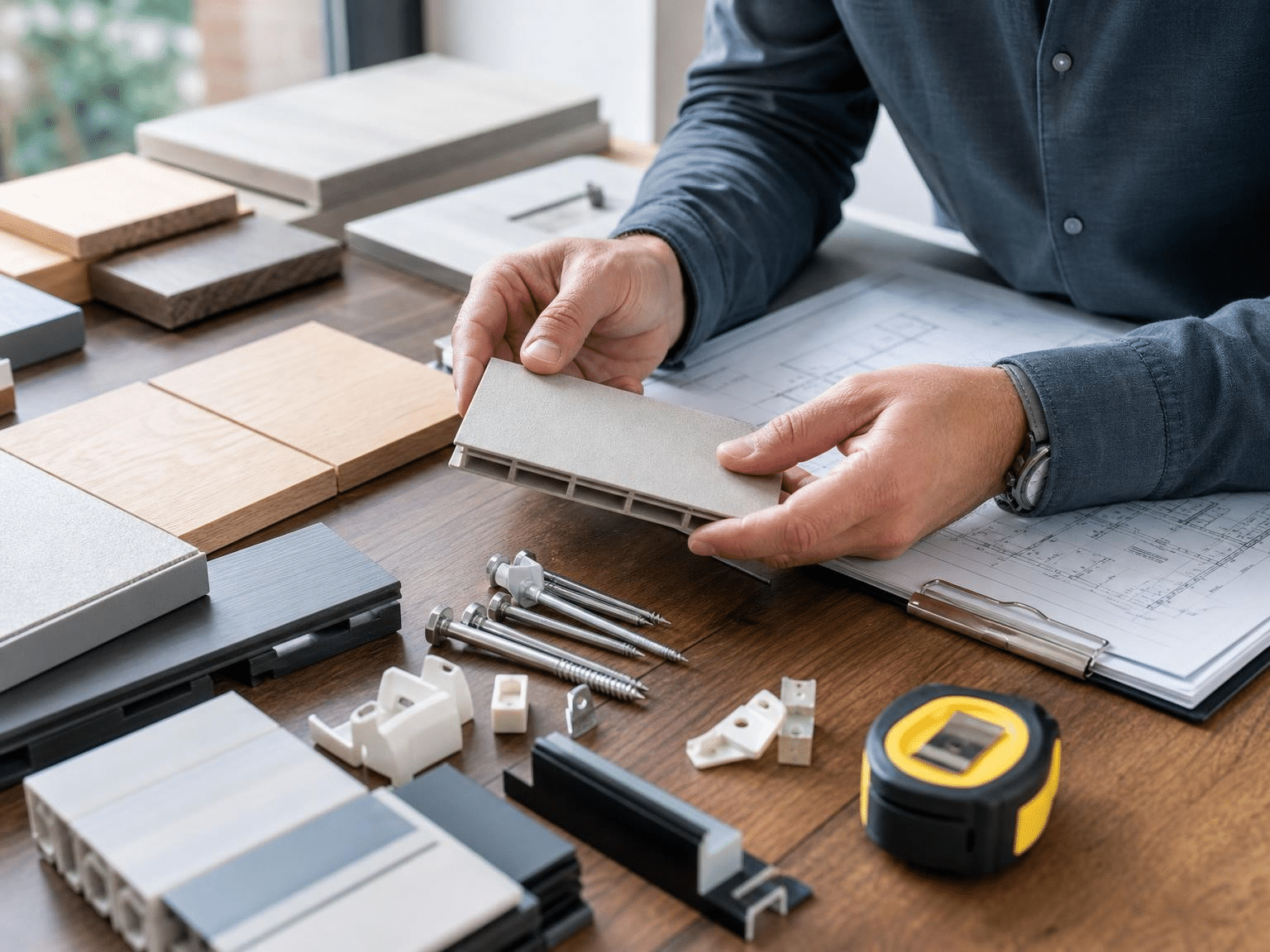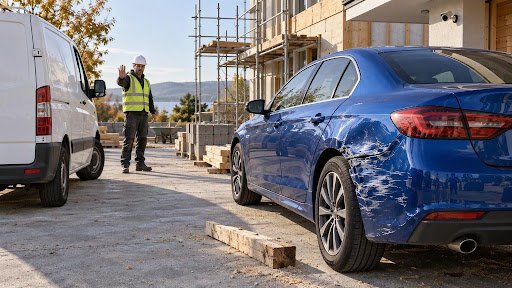
Your parked car sits near loose materials during renovation work, while unfamiliar vehicles and deliveries come close. Your car can still be damaged by a reversing van or falling offcut while you’re away from it. Missing driver details complicate a hit and run insurance claim when you discover damage after the workers have left; there’s also little time to save camera footage before the original recording gets overwritten.
Table of Contents
Protect the scene and preserve evidence
Deal with hazards before moving the car
Check for injuries and fire before anything else. Look for an unstable load or leaking fluids before getting close. Don’t get close. In emergencies, dial 911. Whether an officer comes to the scene depends on local procedures; the police non-emergency line generally takes reports of property-only damage. If work continues, ask the supervisor to pause activity near the damaged car.
Photograph the car and renovation area
Take wide photographs showing the car beside the driveway or delivery area, including any dumpster. Then photograph dents, paint transfer, and debris up close. Record the discovery time and weather. Before moving the car away from the driveway, photograph its original position if it’s safe.

Secure records before they disappear
Export the camera’s original video file rather than filming a playback screen. Save an untouched copy with its timestamps. Ask neighbors for footage right away, and keep delivery confirmations with the project schedule. Keep contractor messages.
Also check Written renovation ground rules to establish where contractors and delivery vehicles were allowed to park.
Work out who should receive the report
Use the incident details, not assumptions
Use this contact map to direct your report, not to decide legal liability. Start with the observed contact or visible debris.
| Likely scenario | Contact first | Evidence to retain |
|---|---|---|
| A known contractor vehicle made contact | Site supervisor and contractor | Vehicle details and written acknowledgment; work log |
| A delivery vehicle may be involved | Delivery dispatcher or retailer | Order record and arrival time; vehicle description |
| Materials or equipment struck the car | General contractor and auto insurer | Scene photographs and debris; project records |
| The responsible driver is unknown | Police and auto insurer | Footage and witness information; incident timeline |
Keep communications factual
Include only facts in your communications. Describe what you observed without blaming a worker prematurely. A contractor isn’t automatically liable for each subcontractor or delivery driver. If someone acknowledges involvement, request their insurer’s details in writing. Your repair estimates and receipts belong in the folder with your claim correspondence.
How to handle a hit and run insurance claim
Report the incident without waiting for certainty
If it looks like a hit-and-run, start with scene photos and save a video copy. Without waiting to identify the driver, promptly notify police and your auto insurer. Ask your insurer which documents it needs because deadlines and policy terms vary. Save your report number. When you give your insurer the time you found the damage, make clear that the camera’s collision timestamp doesn’t establish when you discovered it.
In 2023, crashes involving hit-and-run drivers accounted for 2,872 deaths recorded by NHTSA, down 3.4% from 2,972 in 2022. This national figure concerns all hit-and-run crashes, not specifically renovation-site property damage.

Use video even without a readable plate
When the plate isn’t readable, your home security footage can still help. Check the footage for a vehicle type that matches a scheduled delivery, or to see when and which way the vehicle traveled. Before sending an unedited copy of the native file, ask your insurer or the investigating officer how to transfer it.
For damage tied to a driver who left, keep the police report number and policy correspondence together when filing a hit-and-run insurance claim.
Frequently Asked Questions (FAQs)
What if I don’t know who hit my car?
Photograph after-hours damage where you find it. Ask the site supervisor who was there, then check that day’s delivery records against the footage. Not knowing the driver doesn’t stop you reporting to police and your insurer. Don’t discard confirmation numbers.
Will insurance pay, and can the claim raise my rate?
What’s covered depends on the policy and deductible you have, plus state rules and coverage category. Rate increases aren’t predictable. Your insurer considers jurisdiction and claims history, among other underwriting factors. Before authorizing any repairs, ask your insurer for a written explanation of how it’ll classify the loss.
Do police investigate a parked-car hit-and-run?
Whether officers review your footage with vehicle descriptions and witness accounts depends on police procedures and the resources they have. Filing a report still creates an official incident record for your insurer to request. Keep your case number.
Is suing an identified driver worth considering?
Weigh what you can prove in damages against available insurance and what litigation would cost. You’ll also need to identify who’s responsible. Local legal advice can help you assess the options using your repair estimate.
Can a first hit-and-run lead to jail?
A first hit-and-run can lead to jail in some jurisdictions. Possible penalties depend on local law, how serious the incident was, and whether the collision injured or killed someone or caused only property damage.
Finish with an organized record
Keep a dated incident folder while renovation work continues. Leave earlier entries alone as you file new repair paperwork in the folder, pairing each call note with the follow-up email. When the contractor or insurer asks for clarification, point them to a document rather than guessing. Back up your account with timestamped records and quick reports that stick to facts. Use the original video file you’ve preserved as evidence.