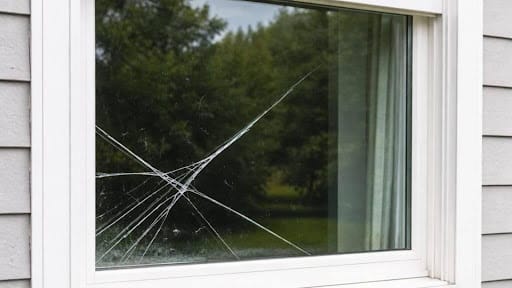
A crack in a window pane can look minor at first, but even a small fracture can spread, and damaged glazing can affect your home’s safety, security, and energy performance over time. This guide walks you through how to assess the damage, what to do immediately after glass breaks, and how to decide whether repair or full replacement is the right call. Knowing the difference can save you time and help you avoid a more costly problem down the road.
Table of Contents
What Causes Window Glass to Crack or Break?
Accidental impact is the most obvious cause, but storms, flying debris, and extreme temperature swings can all put stress on a pane of glass without any direct hit. Glass expands and contracts with heat and cold. When one part of a pane heats faster than another, the tension can cause a crack to form, often starting at the edge. Other common causes include:
- Age and general deterioration of the glass or surrounding frame
- Movement within the building structure
- Damage caused during nearby renovation work
- Doors or windows being slammed repeatedly
If the source of the damage isn’t clear, a professional assessment will give you a more accurate picture before any work begins.
First Steps After Glass Is Damaged
Move children, pets, and anyone else back from loose or shattered glass before doing anything else. Do not attempt to pull a cracked or partially detached pane from the frame. Unstable glass can shift or fall without warning.
A closed door or a simple warning to household members is enough while you work out next steps. For anything beyond a minor chip, contact a qualified glazier for a proper assessment before any work begins.
Repair or Replacement: What Determines the Right Approach?
A small chip in a low-traffic area is a different situation from a crack running across a bathroom door or a shattered pane at an entry point. Cracks generally require full replacement rather than a patch, regardless of how minor they appear.
Glass type, location, and frame condition all feed into the decision too. Certain areas of a home may require safety-rated glazing, which affects both material selection and installation. If the surrounding frame shows deterioration, that may also need to be factored into the scope of work. When these factors combine, a professional assessment becomes the practical starting point.
When Professional Glass Replacement May Be Necessary
Some situations call for a glazier rather than a wait-and-see approach. If any of the following apply, professional replacement is the appropriate next step:
- The pane is shattered or extensively cracked
- The glass feels loose or no longer sits securely in the frame
- The damaged area is in a door, wet area, or other location with specific glazing requirements
- Safety glass has been broken
- The area is difficult to access safely
- You are unsure what replacement glass is appropriate
Homeowners dealing with damaged glazing can explore information from Premium Glass & Glazing about professional glass repair and replacement services and the types of glazing situations that may require specialist attention.
Why the Type of Replacement Glass Matters
Replacement isn’t simply a matter of finding a pane that fits the opening. The glass selected needs to suit the location, the frame, and the way the space is used. Thickness, strength, and safety ratings all vary between glass types. A pane going into a front door or a bathroom enclosure has different requirements than one going into a standard interior opening.
Thermal performance is another consideration for exterior glazing. The existing frame and overall building configuration affect what options are available and what will perform well over time.
Getting the glass type right from the start avoids the need to revisit the job. A qualified glazier can assess the opening and recommend what’s appropriate before any glass is ordered or installed.
Signs It Is Time to Call a Glazier
If you’re unsure whether your situation needs professional attention, run through this checklist. Consider calling a glazier when:
- The pane is shattered, or cracks are continuing to spread
- Glass feels loose or moves within the frame
- A door or opening can no longer be secured properly
- The damaged area is difficult or unsafe to access
- Safety glass may be required for the location
- Multiple panes or glazing components are affected
- You are unsure what replacement glass is appropriate for the opening
When more than one of these applies, getting a professional opinion sooner rather than later is the more practical call.
Preventing Future Glass Damage
Keep frames maintained and address any sticking or misalignment early. A door or panel that drags or binds puts ongoing stress on the glass every time it’s used. Avoid slamming glazed doors. The repeated shock transfers directly to the pane and can cause stress fractures over time, often without an obvious immediate result.
After severe weather, take a few minutes to inspect exterior glazing for new chips or cracks. Catching damage early means dealing with a smaller problem before it spreads. Be mindful when landscaping or renovating near glazed areas. Flying debris from power tools and mowers is a common and easily overlooked cause of glass damage.
Endnote
The right response depends on the severity, location, glass type, and frame condition. Homeowners can handle initial safety steps, but spreading cracks, unstable glass, or locations with specific glazing requirements all call for professional assessment.A